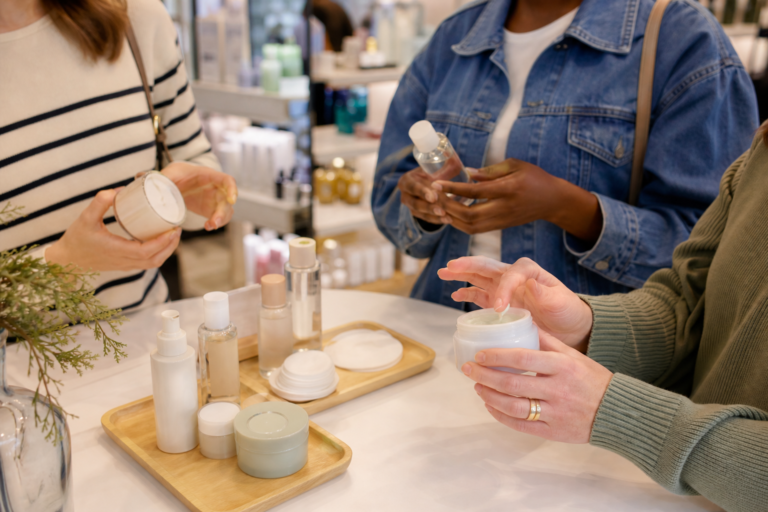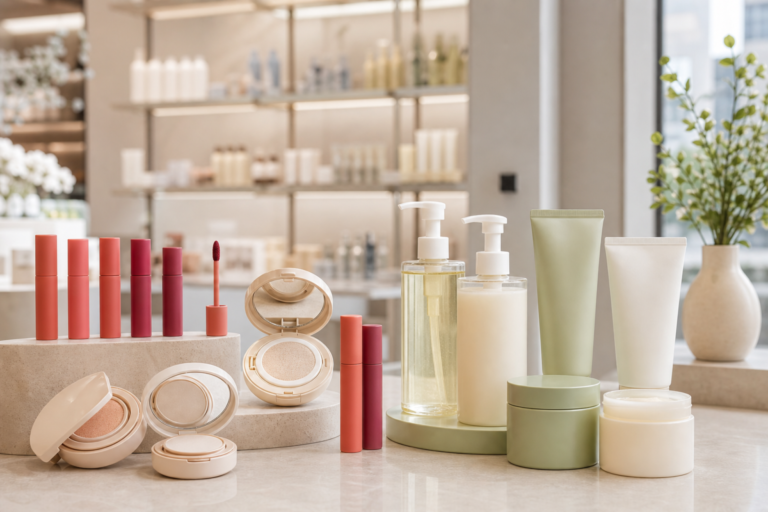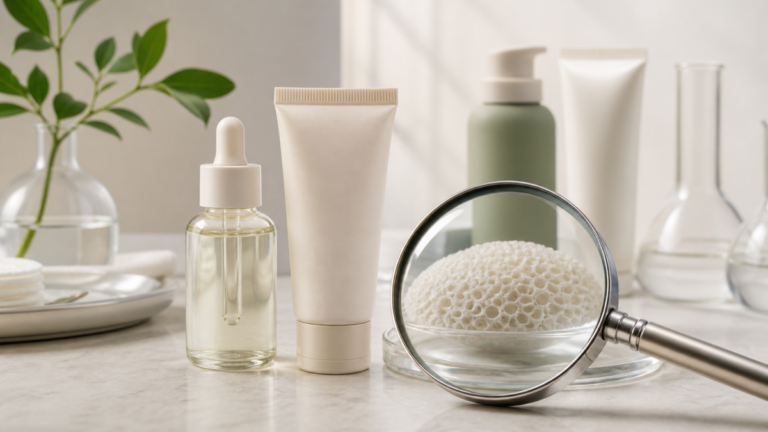
“Microbiome-friendly” has become one of skincare’s most persuasive ideas. K-beauty products now commonly highlight ferments, prebiotic sugars, gentle pH, barrier support, or postbiotic ingredients, while U.S. shoppers encounter increasingly technical language on product pages. The underlying science is real: skin hosts complex communities of bacteria, fungi, viruses, and other microorganisms that interact with the skin barrier and environment. The marketing conclusions, however, can move faster than the clinical evidence. A microbiome claim does not automatically prove that a product treats acne, eczema, sensitivity, or aging. This guide explains the vocabulary, summarizes relevant human studies, shows how U.S. cosmetic-claim rules apply, and offers a practical way to evaluate K-beauty products without assuming that more “microbiome” language means better results.
Why Microbiome Skincare Is Getting Attention
K-beauty has long emphasized layered hydration, mild cleansing, fermented ingredients, and skin-barrier care. Microbiome language gives brands a scientific framework for discussing those familiar priorities. It also appeals to shoppers who are reconsidering harsh cleansing, frequent exfoliation, and complicated routines after experiencing dryness or irritation.
The skin microbiome is not one fixed list of “good bacteria.” Communities vary by body site, moisture, oil production, age, environment, and individual characteristics. A change in microbial diversity is therefore not automatically beneficial or harmful. Researchers must connect a measured shift with validated clinical outcomes before it becomes meaningful to a shopper.
Products also interact with the skin as complete formulas. Humectants, emollients, surfactants, pH, preservatives, packaging, and use frequency may matter as much as a highlighted ferment or sugar. A moisturizer could improve hydration and barrier measurements while producing only modest or uncertain microbiome changes. That is still useful, but it is different from proving that the microbiome caused the improvement.
Prebiotics, Probiotics, and Postbiotics
Prebiotics
In skincare marketing, “prebiotic” generally describes an ingredient intended to support selected microorganisms or a favorable microbial environment. Examples may include certain oligosaccharides or plant-derived substrates. The term does not tell a shopper which organisms are affected, whether the effect was tested in the final formula, or whether the measured change improves a visible skin outcome.
A randomized, double-blind, placebo-controlled trial indexed by PubMed examined a serum containing galacto-oligosaccharides in 60 participants. The published study reported differences in water-holding capacity, transepidermal water loss, erythema, and some microbial measures after eight weeks. That result is interesting but applies to a particular tested formula and protocol; it cannot validate every product containing a similar ingredient.
Probiotics and Postbiotics
“Probiotic” often implies live microorganisms. Keeping organisms alive and stable inside a preserved cosmetic creates formulation and packaging challenges, so many products marketed around probiotics contain ferments, lysates, filtrates, or non-living fractions instead. Ingredient lists and manufacturer explanations matter more than a large front-label word.
Postbiotic is commonly used for non-living microorganisms, their components, or metabolic products, although consumer cosmetic usage is not always consistent. Yeast extracts and bacterial lysates may be presented this way. A shopper should ask what the actual INCI ingredient is, what concentration or test information the brand discloses, and whether the finished product—not merely a raw-material brochure—was evaluated.
Fermented does not automatically mean probiotic, and natural does not mean preservative-free or irritation-free. Fermentation can change an ingredient or create metabolites, but the finished formulation still needs adequate microbial safety and stability. Preservatives serve an important safety function in water-containing cosmetics.
What Human Studies Actually Show
Human evidence is developing, but studies differ substantially. A 2023 randomized, controlled, triple-blind study followed 110 participants for eight weeks while testing three moisturizers under simulated environmental stress conditions. According to the PubMed record, all tested moisturizers improved barrier function and surface moisture from baseline. One moisturizer with yeast extract also showed selected microbiome and laboratory differences. The study included company-affiliated researchers, so readers should consider both its randomized design and potential conflicts when interpreting the conclusions.
A 2025 randomized evaluation examined four low-pH products on the forearms of post-menopausal women. The study report found stable microbial diversity overall and concluded that the tested products did not significantly disrupt diversity. Because the untreated area also showed increased diversity during the study, the results do not support a simple claim that low pH universally “improves” every person’s microbiome.
Research published in 2026 evaluated a ceramide-containing emollient in 50 participants with sensitive skin. The randomized, vehicle-controlled trial reported improved transepidermal water loss in participants with an impaired barrier and modest exploratory microbiome changes. The authors specifically said the clinical relevance of those microbial observations requires further investigation. That caution is important: exploratory sequencing findings are not the same as a proven treatment benefit.
Small studies also illustrate uncertainty. One randomized facial study involved only 14 healthy volunteers and compared products on opposite cheeks. Small samples, short durations, different sequencing methods, company involvement, and varying outcome definitions make it difficult to compare products or identify a universal “healthy microbiome score.” Evidence should be read formula by formula.
How to Read K-Beauty Labels and Claims
Start with the actual cosmetic function. Does the product cleanse, moisturize, soften, or improve the appearance of skin? Then separate that function from microbiome storytelling. A clear cosmetic claim such as “helps skin feel hydrated” is easier to evaluate than “resets microbial balance,” which needs a definition, test method, comparator, duration, and clinically meaningful endpoint.
In the United States, cosmetic labeling must be truthful and not misleading. The FDA’s cosmetics claims guidance explains that claims to treat or prevent disease, or affect the body’s structure or function, may cause a product to be regulated as a drug. A cosmetic marketed as curing eczema, eliminating acne-causing bacteria, or changing immune function raises a different regulatory question from a product described as moisturizing or improving appearance.
Look for specificity in supporting evidence. Useful disclosures identify the number and characteristics of participants, study length, application method, control product, measured endpoints, adverse events, and financial relationships. In-vitro or raw-ingredient results can guide research but do not prove that a finished moisturizer produces the same outcome on human skin.
- Find the INCI ingredient names behind the marketing term.
- Check whether the finished formula was tested on people.
- Distinguish hydration results from microbiome sequencing results.
- Notice whether the study used a vehicle or untreated control.
- Be cautious with disease-treatment and immunity claims.
A product does not become ineffective because its microbiome claim is weak. Glycerin, occlusive agents, mild surfactants, and ceramides may still support ordinary cosmetic goals. Evaluate the formula and your experience, not only the trend vocabulary.
A Practical Microbiome-Conscious Routine
A reasonable routine begins with avoiding unnecessary disruption. Use a gentle cleanser suited to your skin and the makeup or sunscreen you need to remove. Very hot water, aggressive scrubbing, and stacking several strong exfoliants can increase discomfort even without measuring the microbiome. Introduce new products one at a time so you can identify what causes a reaction.
Follow with a moisturizer chosen for your skin type and climate. A simple formula that consistently reduces dryness may be more useful than an elaborate ferment product that irritates you. During the day, use appropriate sun protection; U.S. sunscreen products are regulated as drugs, so follow the Drug Facts label rather than treating sunscreen as an interchangeable microbiome cosmetic.
Patch testing on a small area can help detect irritation, although it cannot rule out every allergy. People with eczema, persistent acne, infection, open skin, or ongoing dermatitis should ask a qualified healthcare professional before relying on trend-driven routines. Cosmetics are not substitutes for diagnosis or prescribed care.
A Smarter U.S. Shopping Checklist
Choose an authorized seller with clear lot identification, ingredient information, return terms, and contact details. Review packaging for damage or leakage and follow storage directions. FDA notes on its microbiological safety page that consumers should keep containers clean, avoid adding water or saliva, and store products as manufacturers instruct because warm or damp conditions can encourage microbial growth and preservative breakdown.
Do not assume preservative-free is safer for a water-based product. Packaging such as pumps or single-use formats may reduce direct contact, but the whole preservation system still matters. Discard products with unexpected odor, color, texture, foreign material, or compromised seals, and report significant problems to the seller and FDA when appropriate.
For J&J TWIN’s Frisco perspective, microbiome products are best approached as an education opportunity: explain the formula, testing, and limitations in plain English. Avoid translating a Korean claim into stronger U.S. disease language. Transparent evidence summaries help shoppers make decisions without turning an emerging research area into a guarantee.
Risks and Limitations
Microbiome science is technically complex. Sampling site, recent washing, climate, sequencing platform, laboratory pipeline, and statistical choices can change results. Diversity is not always synonymous with health, relative abundance is not the same as absolute organism count, and short trials may not show whether changes persist.
Many cosmetic studies are small or industry funded, and formulas differ. Findings from one ingredient, population, or body site should not be generalized to every K-beauty product or skin condition. This article provides educational information, not medical advice or an endorsement of a specific product.
Conclusion & Key Takeaways
Microbiome skincare is a promising research direction, but the best current evidence supports careful, product-specific conclusions. Prebiotic, probiotic, postbiotic, and fermented are not interchangeable terms, and a microbial change does not automatically prove a visible or medical benefit.
U.S. shoppers should prioritize truthful claims, complete ingredient information, finished-formula human testing, appropriate controls, and a routine that protects comfort and barrier function. The smartest K-beauty choice is not the product with the boldest microbiome promise; it is the one whose purpose, evidence, safety, and limitations are clearly explained.