Refillable packaging is becoming a visible part of K-beauty’s U.S. story. Cushion compacts, creams, cleansers, and hair products increasingly appear with replaceable pods or refill pouches designed to keep an outer container in use. The idea is attractive: buy less packaging, keep a well-designed case, and replenish only the formula. Yet a refill format is not automatically lower-impact, recyclable, economical, or hygienic. Results depend on material weight, transportation, local recycling access, repeat purchases, and correct handling. This guide explains the main refill systems U.S. shoppers may encounter in 2026, how Federal Trade Commission environmental guidance applies to marketing language, and how Food and Drug Administration safety advice informs daily use. It offers a practical way to compare products without treating every green-colored package as proof of environmental benefit.
Why Refillable K-Beauty Is Getting Attention
K-beauty has long used modular packaging in categories such as cushion makeup. Applying the model to creams, serums, cleansers, and body care can preserve a pump, mirror, decorative shell, or durable jar while replacing the part that directly holds formula. For consumers, this can reduce the number of complete packages purchased and make a premium container feel less disposable.
The strongest case for a refill is specific rather than symbolic. A brand should be able to identify what component is retained, what component is replaced, and how the refill changes material use compared with the original package. The FTC’s summary of the Green Guides cautions against broad, unqualified claims such as “green” or “eco-friendly,” because those phrases can imply environmental benefits too extensive to substantiate.
Shoppers should also consider behavior. A durable jar offers little source-reduction value if the customer dislikes the formula and never buys a refill. Conversely, a simple system used repeatedly may reduce the number of pumps, caps, mirrors, or heavy shells entering the waste stream. The package needs to work as an ongoing system, not merely as a launch message.
How Refill Systems Actually Work
Replaceable Pods
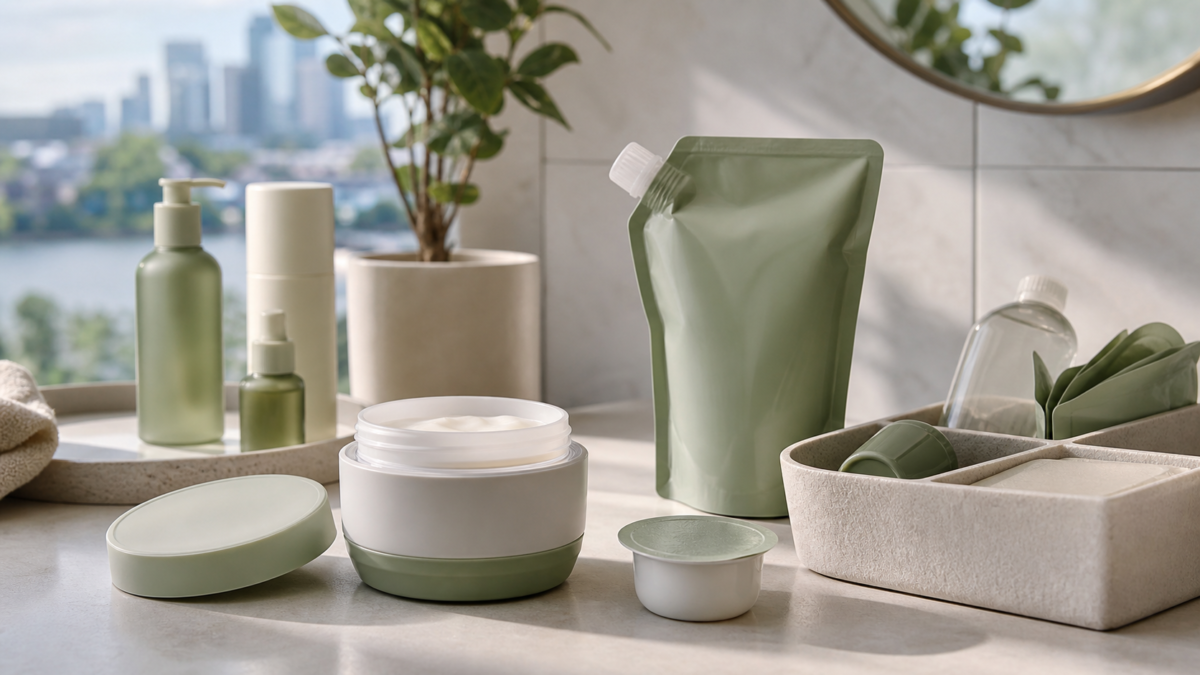
A pod or cartridge sits inside a reusable outer case. This is common where the outer component includes a mirror, applicator platform, decorative structure, or dispensing mechanism. The user removes the empty inner unit and clicks or twists a sealed replacement into place. Because the formula remains in a factory-filled inner container, the process can limit direct handling.
Compatibility is the main practical question. Confirm the exact product line, shade or formula, package generation, and refill size. A brand redesign can make an older shell obsolete. Shoppers should not assume that two similarly sized pods fit one another, and forcing an incompatible refill can damage the seal or dispenser.
Pouches and Pour-In Refills
Pouches often use less rigid material than a second complete pump bottle, but a smaller package is not necessarily accepted by curbside recycling. Flexible multi-layer films can be difficult to process, and residue may affect local acceptance. The meaningful comparison includes the original bottle, pouch, shipping protection, and how many cycles the bottle can withstand.
Pour-in formats require more user care. Follow the brand’s directions about whether the original container should be emptied, washed, or dried. Do not improvise by mixing old and new formulas or adding water. If the brand sells a dedicated refill bottle or pump replacement, use the intended components because they were designed around the product’s dispensing and preservation system.
How to Read U.S. Environmental Claims
The FTC evaluates both express claims and reasonable implied messages. A leaf icon, green color palette, and vague “planet kind” statement can collectively suggest more than the package actually delivers. The agency’s environmental marketing resources state that claims about products or packaging need competent and reliable evidence.
Refillable Must Mean a Refill Exists
Under the Green Guides summary, marketers should not make an unqualified refillable claim unless they provide a way to refill the package. That can mean selling a product that refills the original container or operating a collection-and-refill system. A jar that is physically capable of holding something again is not enough if no suitable refill pathway is actually offered.
Before paying more for a reusable shell, find the refill listing and verify that it is available in the United States. Check its price, volume, ingredients, and expected availability. A refill sold only in Korea or discontinued after one season may not provide a practical U.S. system, even if the outer package remains technically reusable.
Recyclable Depends on Access
Technical recyclability and real-world collection are different. The FTC says recyclable claims should be qualified when appropriate facilities are not available to at least 60 percent of consumers or communities where an item is sold. As access declines, the limitation should become more prominent. Therefore, a resin symbol or brand statement does not override local program rules.
Beauty packages often combine pumps, springs, labels, mirrors, coatings, and different plastics. Ask which component the claim covers. Check the municipal or drop-off program serving your own address, and follow its instructions about separating, rinsing, or discarding components. Wish-cycling an unaccepted pouch can contaminate a recycling stream rather than improve the outcome.
Hygiene, Storage, and Product Safety
Packaging protects a cosmetic from contamination and environmental exposure. The FDA’s page on microbiological safety and cosmetics identifies inadequate packaging protection and consumer practices as potential factors in contamination. It advises washing hands before applying products, especially when fingers enter a container.
Keep refill components sealed until use, follow the manufacturer’s transfer directions, and close the container tightly. Do not top off an old product with a new one unless the directions specifically permit it. Mixing batches, introducing tap water, or pouring through an unclean funnel may undermine the formula and make a later problem harder to trace.
The FDA’s cosmetic safety advice recommends keeping containers clean and tightly closed and protecting cosmetics from temperature extremes. Marking the opening date can help track age. Stop using a product that develops an unusual odor, color, texture, swelling package, or other sign of deterioration, and report serious adverse events through appropriate channels.
A Practical Shopping Checklist
- Confirm the system: Find the exact U.S. refill and confirm compatibility before buying the outer package.
- Compare complete material: Consider the shell, inner cup, pouch, cap, pump, labels, and shipping packaging.
- Calculate value: Compare price per unit of formula, not only the lower sticker price of the refill.
- Read specific claims: Prefer measured statements about material or package reduction over vague environmental praise.
- Check local disposal: Use the rules of the recycling program serving your address.
- Review handling directions: Determine whether the container is replaced, cleaned, dried, or simply fitted with a sealed pod.
- Consider repeat use: Choose a refill system only when you are likely to repurchase the formula.
For K-beauty brands entering the United States, the same checklist can guide product-page design. Show the refill process, name compatible stock-keeping units, state which components are retained, and place qualifications near environmental claims. J&J TWIN or another U.S. operating partner can verify that the physical package, online listing, and retailer training communicate the same facts without inventing a lifecycle benefit.
Risks and Limitations
A refill can reduce some packaging while increasing another impact. A heavy durable case requires materials and energy upfront; a pouch may use less material but lack local recovery; international transport and protective shipping also matter. Without a product-specific lifecycle assessment, consumers and writers should not claim that one system is universally superior.
The FTC Green Guides are guidance describing how the agency views environmental marketing, not a certification program. State laws and retailer standards may add requirements, and the FTC has been reviewing the Guides. Brands should verify current federal and state requirements with qualified counsel before making claims. Consumers should treat environmental seals carefully when the basis is not clearly disclosed.
Refilling also does not extend a formula indefinitely. Follow labeled shelf-life and use instructions, and never transfer a product into a package that could be mistaken for food or medicine. This article provides general consumer and market information, not legal, environmental-engineering, or medical advice.
Conclusion & Key Takeaways
Refillable K-beauty packaging is most meaningful when a real U.S. refill exists, the durable component survives repeated use, claims describe specific benefits, and customers follow safe handling directions. Attractive design can encourage reuse, but color and symbolism do not prove recyclability or a lower total footprint.
Before buying, locate the refill, compare the full package, check local recycling rules, and decide whether you will realistically repurchase the formula. Brands should support every environmental message with evidence and clear qualifications. That practical discipline turns refills from a short-lived trend into a more credible part of the U.S. K-beauty market.