K-beauty brands often use pop-ups, retailer events, and community markets to let shoppers experience textures and routines. In Texas, however, an event can move from product education into regulated cosmetology or esthetic services when a representative cleanses, massages, beautifies, or administers a facial treatment to another person. The answer does not depend only on calling the activity a “demo” or making it free. The actual acts, compensation structure, practitioner license, location, equipment, and advertising all matter. This guide uses current Texas Department of Licensing and Regulation resources to help brands separate retail sampling from hands-on services, plan safer tester practices, and identify questions that should be confirmed before an event. It is a planning framework, not a legal determination for a specific activation.
Why the Demo–Service Boundary Matters
A retail demonstration can be simple: an educator describes ingredients, dispenses a sample onto a clean palette, or lets a customer apply a product to their own hand. A service looks different: the representative touches the customer and cleanses, massages, treats, or beautifies the customer’s face, neck, shoulders, or arms. Texas law defines regulated practices by the acts performed, not by a brand’s marketing label.
The Texas Occupations Code Chapter 1603 describes barbering and cosmetology as performing or offering certain services for compensation. The list includes cleansing, stimulating, or massaging specified body areas; beautifying the face, neck, shoulders, or arms with cosmetic preparations; and administering facial treatments. A five-minute “skin refresh” can therefore raise a different issue from showing a customer how a serum pump works.
Compensation and event design
Do not assume that no separate service fee ends the analysis. An event may be connected to product purchases, tickets, memberships, retailer compensation, lead generation, or an employee’s paid work. Whether a particular arrangement constitutes compensation or an offer of regulated services is fact-specific. Before relying on a free-demo theory, describe the full event to TDLR or Texas counsel.
Create a written service map. For each step, identify who touches whom, which body area is involved, what product or device is used, whether the customer pays directly or indirectly, and what the advertisement promises. This makes hidden scope issues visible before staff training and promotional materials are finalized.
Advertising language can change expectations
Words such as “facial,” “treatment,” “esthetician consultation,” “skin cleansing,” and “massage” may describe regulated activities or imply that they will be offered. The TDLR cosmetology operator scope guide says only appropriately licensed individuals may perform listed services and that unlicensed people cannot represent themselves using protected professional terms.
Event copy should match the approved activity. If the plan is education and self-application, say that clearly. Avoid promising personalized diagnosis, treatment of a skin condition, or a professional facial when the staffing and venue do not support those services. Train social-media partners to use the same language as the event page.
Texas Services That Require Attention
TDLR’s Who Regulates What guide identifies facial beautifying or cleansing, facial treatments, and beautifying treatments applied to a person’s face, neck, shoulders, or arms as TDLR-regulated activities requiring an appropriate license. Its scope materials also include massage or stimulation of specified areas, with or without cosmetic preparations.
For K-beauty events, examples that deserve review include an employee performing double cleansing on a guest, massaging in an essence, applying a multi-step facial, using an appliance on the face, removing facial hair, or advertising a professional skin treatment. The fact that a product is sold at retail or can be used at home does not necessarily make the staff-applied service unregulated.
By contrast, product description, shade or texture display on a disposable surface, sealed take-home samples, and customer self-application may be structured as retail activity. Texas agencies do not publish a universal safe-demo checklist covering every fact pattern, so businesses should not treat these examples as automatic exemptions. The safest plan keeps unlicensed educators from touching customers or performing acts listed in the statute.
Practitioner and Establishment Requirements
A practitioner’s individual license is only part of the analysis. TDLR explains on its medical spa and esthetics guidance that estheticians may perform esthetic services at an establishment licensed by TDLR. A business employing or leasing space to a licensed cosmetologist or esthetician must meet establishment and equipment requirements, including applicable water, restroom, health, and safety provisions.
This matters for hotel ballrooms, boutiques, mall kiosks, convention booths, and temporary market tables. Hiring a licensed esthetician does not automatically transform every venue into an approved establishment. Confirm the practitioner’s active Texas license, the establishment category, the address or mobile authorization, and whether the planned services are within both scopes.
Remote and mobile services are separate paths
Texas permits certain digitally prearranged remote services by licensed practitioners under specific conditions. The TDLR remote-services page lists the limited activities allowed and explains that they must be prearranged through a digital network. This is not a general permission for spontaneous hands-on services anywhere.
A mobile establishment is also a defined, self-contained mobile unit with its own licensing requirements. A folding booth carried to a weekend market should not be called a mobile establishment simply because it moves. Select the correct regulatory path rather than combining terms from different programs.
The medical-procedure boundary
An esthetician license does not authorize medical procedures. TDLR says procedures such as injections, fillers, laser-assisted treatments, and deeper treatments that penetrate living tissue fall outside ordinary cosmetology or esthetics scope and may require physician involvement or another regulator. Permanent makeup and certain other services may be regulated by the Texas Department of State Health Services.
K-beauty event staff should not diagnose acne, eczema, rosacea, infection, or allergy, and should not promise to treat disease. A “professional” device supplied by a brand still has to fit the practitioner’s lawful scope. If an activity uses needles, penetrates living tissue, employs laser energy, or makes medical claims, stop and obtain agency-specific guidance before advertising it.
How to Design a Lower-Risk Product Demonstration
A brand that wants education rather than a regulated service can design the experience around observation and self-application. The representative may explain the product’s labeled purpose, show the package, dispense a small amount onto a disposable palette, and invite the customer to apply it to their own intact skin. This also gives the customer control over pressure, location, and whether to participate.
- Define the event in writing. State that it provides product education and customer self-application, if that is accurate.
- Prohibit staff contact. Unlicensed educators should not cleanse, massage, beautify, or administer facial treatments to guests.
- Remove treatment language. Review invitations, booking pages, booth signs, influencer briefs, and staff scripts.
- Use simple tools. Avoid appliances or techniques that could change the scope analysis.
- Create a referral path. Staff should direct medical or individualized treatment questions to qualified professionals.
If hands-on services are commercially important, build a compliant service model instead of trying to disguise them as sampling. Engage licensed Texas practitioners, confirm an appropriate establishment, limit each practitioner to their legal scope, and implement the required sanitation and record processes.
Tester Hygiene and Customer Safety
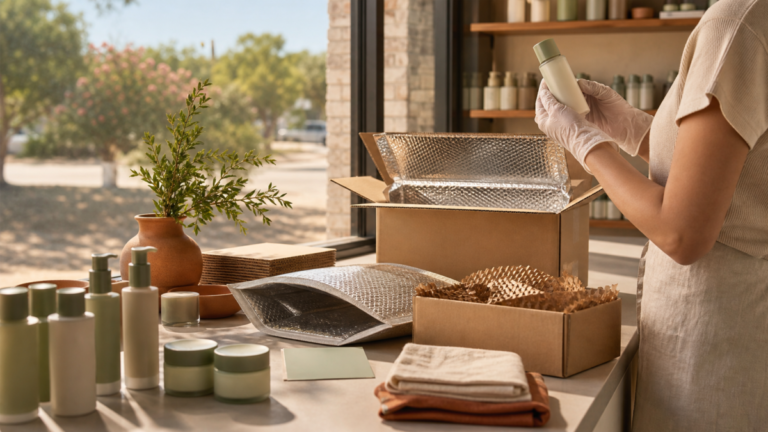
Even a non-service retail demonstration needs hygiene controls. Shared open jars, direct-to-skin applicators, and repeated contact with pump nozzles can contaminate products. Prefer single-use sachets, individually dispensed portions, pumps that do not touch skin, and disposable spatulas. Never return unused product from a palette to the original container.
Provide hand hygiene before participation, clean the work surface between guests, separate unused supplies from waste, and discard single-use items immediately. Do not apply or encourage testing on broken, inflamed, infected, or visibly irritated skin. TDLR’s inspection guide emphasizes hand sanitation, cleaned and disinfected tools, single-use controls, and avoiding service on certain contagious or compromised conditions in licensed settings. Those principles are useful risk controls for retail testing as well.
Ask about known sensitivities without presenting the question as medical screening. Make the ingredient list available, keep the original labeled packaging at the booth, and do not call a quick patch application an allergy test. A short event cannot guarantee that a delayed reaction will not occur.
North Texas Event Planning Checklist
- Write every customer interaction step and identify any staff-to-customer contact.
- Check current individual licenses through TDLR when regulated services are planned.
- Confirm that the venue has the correct establishment authorization for those services.
- Review advertisements, booking flows, compensation, tickets, and purchase requirements.
- Verify insurance coverage for both retail sampling and any professional services.
- Use current U.S. labels and keep ingredient information accessible.
- Prepare single-use supplies, hand hygiene, surface cleaning, and waste separation.
- Create incident, product complaint, and adverse-event escalation procedures.
- Ask the venue about water, restroom, electricity, fire, occupancy, and local event rules.
- Document TDLR guidance received for any unusual format before launch.
For a Frisco-based operation such as J&J TWIN, this checklist can become a repeatable approval gate for events across Dallas–Fort Worth. Each new venue and activity should still be reviewed; copying the setup from a previous pop-up does not prove that a new service, device, or payment model is covered.
What to Look Out For: Risks and Limitations
The line between retail education and a regulated service depends on facts. This article cannot determine whether a specific “complimentary” demo involves compensation or whether a venue qualifies under a particular licensing path. Rules and agency interpretations may change after publication.
Multiple agencies can have jurisdiction. TDLR regulates barbering and cosmetology, while medical acts, massage therapy, laser hair removal, permanent makeup, sales tax, food service, building safety, and local event permits may involve other authorities. One license does not authorize every beauty-related activity.
Hygiene procedures reduce risk but cannot guarantee that a participant will not experience irritation or an allergic response. Product educators must stay within truthful cosmetic claims and should not provide medical advice. Businesses should contact TDLR and appropriate Texas counsel with a detailed event description before relying on an exemption or remote-service pathway.
Conclusion & Key Takeaways
A K-beauty product demonstration in Texas can remain a focused retail experience when staff explain products and customers apply samples themselves. The risk changes when representatives touch customers to cleanse, massage, beautify, or perform facial treatments—activities Texas identifies within regulated barbering and cosmetology practice when performed or offered for compensation.
Brands should map the exact activity, payment structure, advertising, practitioner license, establishment, equipment, and hygiene plan before promotion begins. If the event includes hands-on services, use the appropriate licensed people and place rather than relying on the word “demo.” Clear boundaries protect customers, practitioners, venues, and the long-term credibility of K-beauty businesses in North Texas.