A North Texas pop-up can give a K-beauty brand something online analytics cannot fully provide: a controlled opportunity to observe which products invite questions, which textures encourage trial, and which explanations help shoppers make confident decisions. But a busy booth is not automatically a successful market test. The event must be designed around specific questions, compliant sales operations, consistent customer education, and a measurement plan established before opening day. This guide explains how a Korean beauty brand or U.S. partner can plan a Frisco or Dallas-Fort Worth pop-up in 2026 without inventing local demand or treating one event as proof of an entire market. It combines official Texas and City of Frisco requirements with practical methods for testing assortment, messaging, price, and follow-up while protecting customer trust.
Why a Pop-Up Can Be a Useful Market Test
K-beauty products often benefit from sensory explanation. Shoppers may want to compare the slip of two essences, see whether a sunscreen leaves a visible cast, or understand where an ampoule belongs in a routine. A temporary physical format lets a brand observe those questions in a structured setting. It can also show whether packaging communicates clearly without a long product page.
Frisco is one possible testing location, not a guaranteed shortcut to national success. The U.S. Census Bureau’s QuickFacts profile for Frisco provides current demographic context that planners can use when describing the city. Demographic statistics are useful for framing a market, but they do not reveal individual skincare needs, brand awareness, or purchase intent. Those questions require direct, responsibly collected evidence.
The best pop-up produces two outputs: revenue from the event and learning that improves the next decision. A brand might discover that a lower-priced cleanser attracts attention but a routine bundle converts better, or that shoppers recognize an ingredient name but misunderstand its role. Those are hypotheses to test, not facts to announce before the event.
Design the Test Before Choosing the Venue
Choose One Primary Question
A pop-up becomes hard to interpret when the team changes the product range, price, promotion, signage, and sales script at the same time. Select one primary decision. Examples include whether shoppers prefer a hydration-focused starter routine over single products, whether fragrance-free positioning deserves more shelf space, or whether a particular price point creates resistance.
Write the question in a form that can lead to action. “Do people like our brand?” is too broad. “Among visitors who receive the same routine explanation, what share chooses the three-step set rather than an individual serum?” is measurable. Define what the company will change if the result is strong, weak, or inconclusive.
Use a Deliberate Assortment
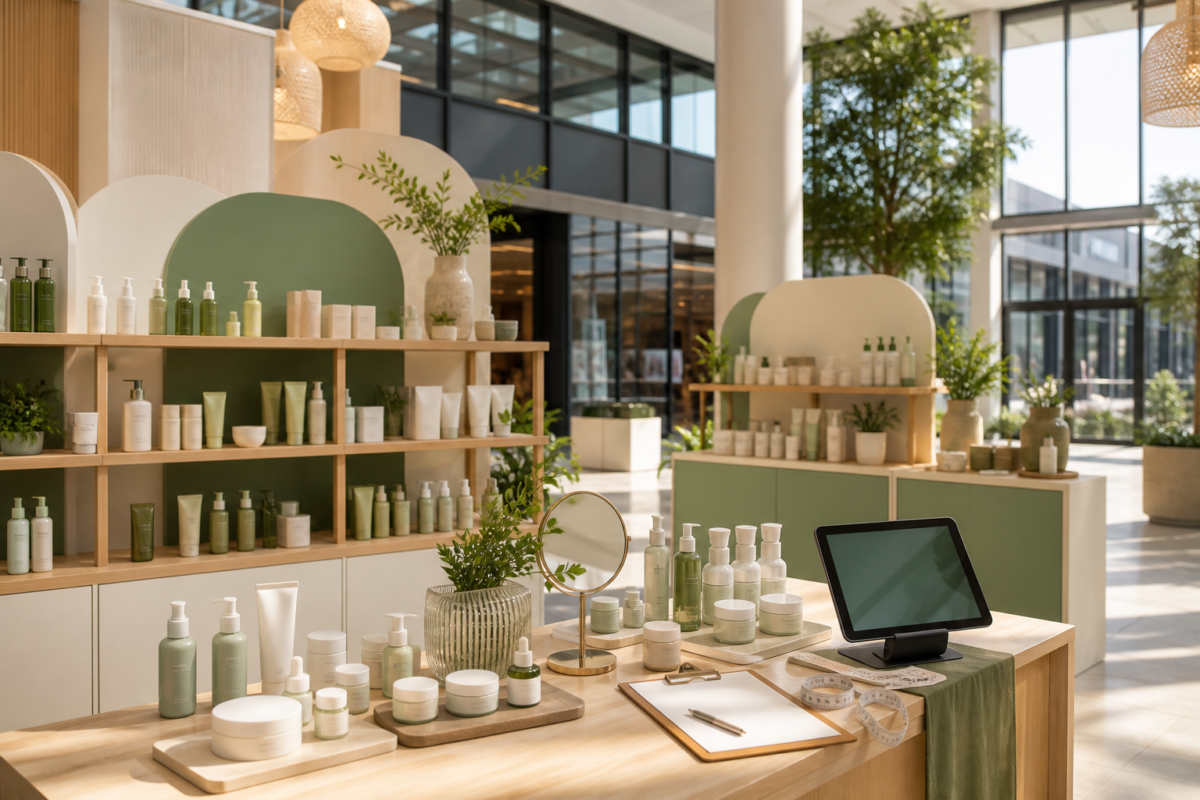
A large assortment can make a temporary booth look impressive while creating too many variables. Start with a clear architecture: a small number of hero products, one or two routine pathways, and a limited set of add-ons. Every item needs a plain-English purpose, price, directions, ingredient information, and stock record.
Keep formula and packaging versions consistent. If testers differ from the retail units, label and control them so staff do not describe one formula while selling another. Lot tracking and documented replenishment also make inventory discrepancies easier to investigate.
Define Success Metrics in Advance
Useful metrics can include qualified conversations, demonstrations completed, unit and bundle conversion, average transaction value, out-of-stock events, returns, and voluntary email sign-ups with valid consent. Record denominators. “Twenty bundle sales” means more when the team also knows how many visitors received the comparable demonstration.
Avoid collecting more personal data than the test needs. If follow-up is part of the plan, explain what customers are joining and how their information will be used. Do not merge a giveaway entry into marketing consent without clear language appropriate to the program.
Choose the Location and Format
Match the Venue to the Audience and Question
A mall kiosk, beauty retailer collaboration, community market, private studio event, and outdoor festival create different traffic and expectations. High foot traffic may increase impressions but reduce the time available for consultation. A hosted event inside an established beauty business may produce fewer visitors but more relevant conversations. Evaluate audience fit, not just the organizer’s attendance estimate.
Ask for prior-event information in a form that can be verified: hours, location, vendor mix, booth dimensions, included utilities, insurance requirements, cancellation rules, and how attendance was counted. An organizer’s social following is not a substitute for evidence about comparable events.
Plan for North Texas Conditions
Outdoor heat and direct sun can affect staff comfort, testers, packaging, devices, and product storage. Develop temperature and light controls based on the product’s supported storage conditions rather than a generic assumption that all skincare is stable in a booth. Indoor venues still require a plan for load-in time, power, internet reliability, security, waste, and end-of-day inventory.
Accessibility is part of the retail design. Keep pathways open, place products and information at usable heights, and make the consultation understandable without requiring a customer to handle every tester. Ask the venue which accessibility, fire, tent, electrical, and insurance rules apply to the planned setup.
Permits, Sales Tax, and Operating Basics
Texas Sales and Use Tax
The Texas Comptroller’s official guidance for fairs, festivals, markets, and shows says sellers of taxable items at these events may be responsible for collecting and remitting Texas sales and use tax. It states that sellers, including out-of-state sellers participating in Texas events, must have a Texas Sales and Use Tax Permit when they sell taxable items, take orders, or use the event to promote sales, subject to the detailed rules and exemptions.
The Comptroller also says there is no fee to apply for the permit and warns that sellers operating without one may face a penalty. Tax sourcing can depend on where a sale occurs and how an order is fulfilled. Configure the point-of-sale system before the event, retain transaction records, and confirm the correct local treatment with the Comptroller or a qualified tax adviser.
Local Event and Venue Requirements
Permit requirements depend on the city, property, event format, attendance, structures, and activities. The City of Frisco’s Special Event Permitting page lists triggers such as certain street closures, events in city parks, 100 or more attendees, large tents, generators, and other activities. It also says a complete application needs a detailed site map and describes timing and fees that planners should verify directly before applying.
A vendor joining an organizer’s event should not assume the organizer’s approval automatically covers every seller obligation. Request written confirmation of booth rules, insurance, fire-safety requirements, signage, sampling, electrical use, and load-in procedures. If the format changes, ask whether the permit analysis changes too.
Cosmetic Compliance Still Applies
A temporary booth does not suspend federal cosmetic requirements. Products should be safe and properly labeled, and marketing should not turn a cosmetic into an unapproved drug through disease-treatment or structure-function claims. Staff scripts, table signs, QR landing pages, and demonstrations should follow the same approved claim boundaries as the package and website.
Testers need written hygiene and incident procedures. Use applicators and cleaning practices appropriate to the product and do not return dispensed material to its container. Staff should know how to respond to irritation, preserve relevant lot information, and route complaints to the responsible team without diagnosing a customer.
Build a Trustworthy Customer Experience
Create a Consistent Conversation Path
Train staff to begin with the shopper’s goal and current routine rather than a memorized list of benefits. A short path might cover product category, texture preference, routine placement, directions, supported claims, price, and limitations. Consistency makes feedback more comparable and reduces the risk that one salesperson creates demand with exaggerated promises.
Keep a concise reference sheet behind the booth with current ingredients, usage instructions, allergen or sensitivity information that the brand can substantiate, and escalation contacts. Staff should be comfortable saying they do not know and offering an official source rather than improvising.
Separate Sampling From Evidence
A hand demonstration can show texture, spread, finish, and immediate feel. It cannot prove long-term efficacy or suitability for every skin type. Explain that distinction clearly. If samples are distributed for later use, include directions, identity, and traceability information appropriate to the format.
Use neutral feedback questions. “What did you notice about the finish?” produces better evidence than “Did you love the lightweight finish?” Record both positive and negative observations. A market test that hides objections may create a flattering report but a weaker launch.
Measure Results Without Overclaiming
Complete a Daily Close
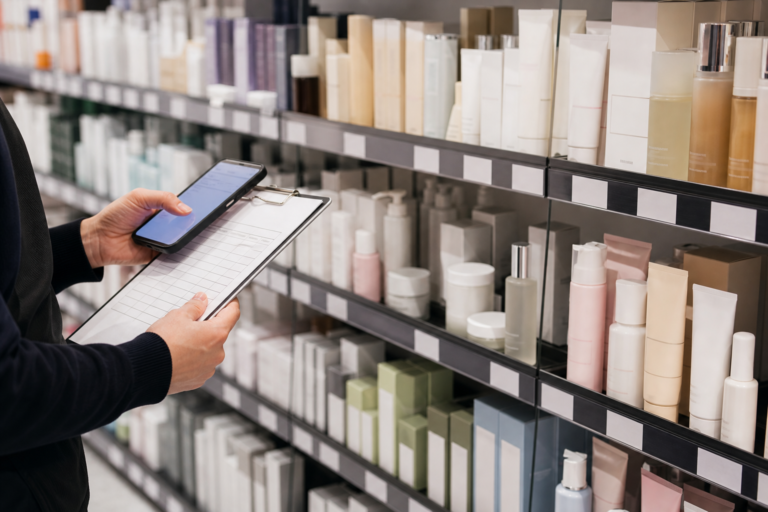
Reconcile transactions, units, testers, samples, discounts, returns, and remaining stock. Note operational interruptions such as payment downtime or a product being unavailable. Without that context, a low conversion rate may be wrongly attributed to the assortment when the real cause was a broken checkout device.
Hold a brief structured staff debrief using the same questions each day. Capture repeated customer questions, objections, confusing labels, and products customers compared. Separate direct observations from interpretation. “Seven shoppers asked whether the toner contains fragrance” is an observation; “Texas consumers dislike fragrance” is an unsupported generalization.
Write a Decision Report
After the event, compare results with the pre-defined thresholds and identify data quality problems. Segment only where the sample and collection method support it. Include costs such as venue, labor, travel, samples, payment fees, insurance, fixtures, damaged inventory, and follow-up—not just gross sales.
The conclusion may be to run a second test rather than scale. Replication across another date, venue type, or message can show whether a result is stable. For J&J TWIN in Frisco, the most responsible local-market perspective is to treat each pop-up as one documented learning cycle, not as a claim to represent all North Texas shoppers.
Risks and Limitations
Pop-up visitors are a self-selected group, venue traffic is not a random sample, and weather, promotions, neighboring vendors, holidays, and staff performance can influence results. A single event cannot establish regional market share or national demand. Small sample sizes make percentages look more precise than they are.
Rules, permit fees, deadlines, tax requirements, and venue policies can change. This article provides general planning information, not legal, tax, medical, insurance, or regulatory advice. Confirm requirements with the Texas Comptroller, the relevant municipality, the venue, and qualified professionals for the specific event. Do not hold an event until required approvals and operational safeguards are in place.
Conclusion & Key Takeaways
A strong North Texas K-beauty pop-up starts with a clear business question, a controlled assortment, consistent customer education, and measurable success criteria. Venue fit, Texas sales-tax responsibilities, local permits, product compliance, tester hygiene, and reliable records are part of the test—not administrative details to handle afterward.
Measure observations with context, retain negative feedback, and resist turning one busy day into a broad market claim. The most valuable outcome is a defensible next decision: refine the assortment, revise the message, repeat the test, or pause expansion until the evidence improves.