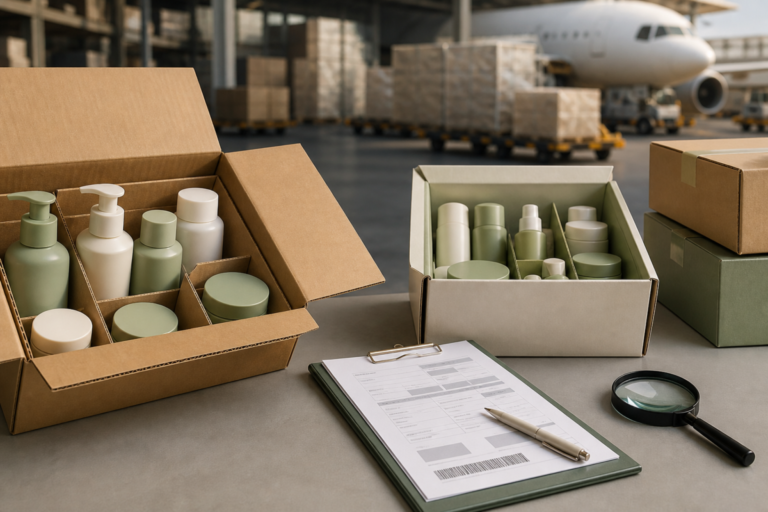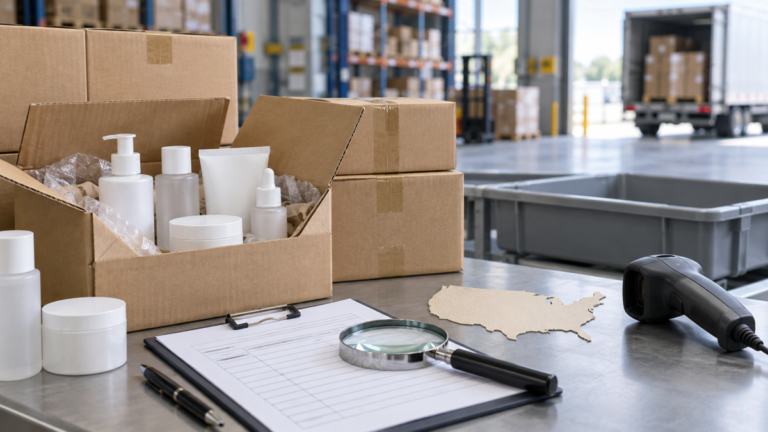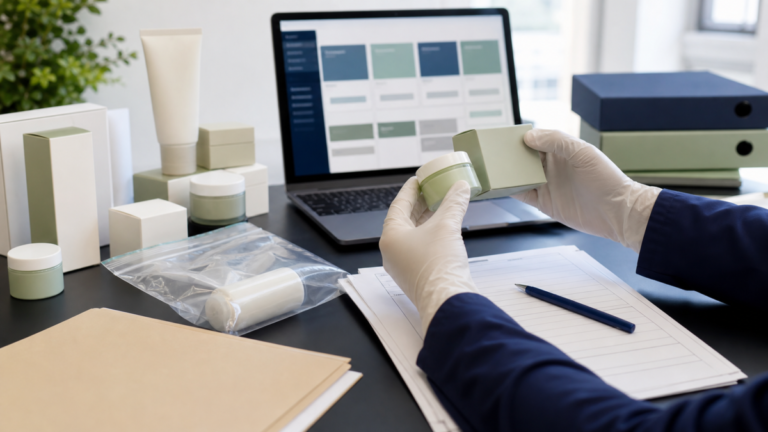
A Korean beauty product can be developed in Seoul, manufactured and filled in Korea, imported by a Texas company, and promoted through a U.S. retailer. Each fact may be true, but placing them on one package without a clear hierarchy can confuse shoppers about where the product was made. Country-of-origin marking, the responsible company’s address, and voluntary marketing claims serve different legal purposes. For K-beauty brands entering the United States in 2026, this distinction matters before cartons are printed or online listings go live. This guide explains the federal framework using current FDA and Federal Trade Commission guidance, shows why “Distributed by” is not an origin statement, and provides a practical review workflow. It is general information, not a customs ruling or legal opinion; actual origin can depend on manufacturing facts and product-specific law.
Three Different Questions on One Package
The first question is where the imported article originates for customs marking. The second is which business manufactures, packs, or distributes the cosmetic for U.S. labeling purposes. The third is what overall origin message advertising conveys to a reasonable consumer. These questions interact, but one answer does not automatically resolve the others.
For example, “Distributed by a Frisco, Texas company” identifies a U.S. business relationship. It does not mean that the formula was made in Texas. “Designed in California” describes a particular activity but does not disclose where manufacturing occurred. “Made in Korea” is an origin representation and should match the actual customs analysis.
A brand should create a fact sheet listing formula manufacture, bulk processing, filling, primary packaging, secondary packaging, and any later U.S. operations. Marketing, customs, legal, and retail teams should work from the same facts. Contradictions often arise when an online team emphasizes a U.S. address while the physical label carries a foreign-origin mark in small print.
Country-of-Origin Marking for Imported Cosmetics
Visibility and English Country Name
The FDA’s summary of cosmetic labeling requirements states that cosmetics marketed in the United States, whether domestic or imported, must comply with applicable federal laws. It also notes that the Tariff Act requires imported articles to state the English name of the country of origin.
Customs marking is administered by U.S. Customs and Border Protection, not created by the FDA cosmetic registration process. As a general principle, the mark must reach the ultimate purchaser in a manner that is legible, conspicuous, and sufficiently permanent for the circumstances. Placement only on removable logistics material may fail when the consumer receives an individual retail unit.
Use the country name recognized in English and avoid relying only on a national symbol or non-English wording. The exact article or container that must be marked can depend on how the product is imported and sold. Brands with unusual assembly or repackaging facts can request advice from customs counsel or pursue a CBP ruling rather than guessing after inventory arrives.
A U.S. Address Does Not Change Origin
Cosmetic labels generally identify the name and place of business of the manufacturer, packer, or distributor. When the named firm is not the manufacturer, FDA guidance explains that wording such as “Manufactured for” or “Distributed by” should appropriately qualify the relationship. This company declaration is separate from country of origin.
A Korean-made serum may therefore show a U.S. distributor and still require a Korean origin mark. The two statements answer different questions. A prominent Dallas or New York address paired with a hard-to-find origin mark can create an overall misleading impression, especially if American imagery or promotional copy reinforces it.
Review the principal display panel, information panel, bottom label, carton, e-commerce gallery, product description, retail shelf card, and social advertising together. Consumers encounter the net impression across these surfaces, while regulators may evaluate both express language and implication.
When a U.S.-Origin Claim Becomes Risky
The FTC’s Made in USA Rule says marketers using an unqualified Made in USA label should be able to prove the product is “all or virtually all” made in the United States. FTC business guidance explains that final assembly or processing, significant processing, ingredients, and components are relevant. An unqualified claim is not suitable merely because final boxing or distribution occurs in America.
For a cosmetic made in Korea, phrases such as “American beauty,” prominent U.S. imagery, or an origin-themed seal may imply domestic manufacture even without the exact words “Made in USA.” A U.S. brand name or ordinary address alone does not normally establish an origin claim, but context matters. The question is the net message likely received by consumers.
The FTC does not pre-approve origin claims. The marketer bears responsibility for having a reasonable basis when the claim is made and for updating it if sourcing changes. Its Made in USA compliance guide also warns against implying an entire product line is U.S.-made when only some items meet the standard.
How to Use Qualified Processing Claims
A qualified claim describes a limited U.S. activity without implying that the whole product is domestic. The FTC gives an example such as “Designed in USA — Made in Finland” when design and manufacture truly occur in those locations. For beauty products, possible facts could include U.S. design, testing, packaging, or distribution, but each statement needs accurate substantiation and a clear foreign-origin disclosure where required.
Words such as “created,” “produced,” or “manufactured” can communicate broad origin and may need qualification. “Formulated in Korea” can also be ambiguous if readers infer that manufacturing occurred there when only formula development did. State what happened and where: formulation development, bulk manufacture, filling, or packaging. Do not replace a required origin mark with a narrower marketing phrase.
Proximity and prominence matter. The FTC’s enforcement policy notes that when a U.S. place name on an imported article may mislead the ultimate purchaser, the actual country name may need to appear legibly and permanently in close proximity and comparable size, preceded by appropriate wording. Packaging counsel should evaluate the complete design rather than approve isolated lines in a spreadsheet.
A Packaging Review Workflow
- Map production. Record the country for ingredient transformation, bulk manufacture, filling, component production, and final packing.
- Determine customs origin. Apply the relevant CBP rules and obtain product-specific advice where transformation is complex.
- Choose the responsible-company statement. Identify whether the U.S. firm is manufacturer, packer, or distributor and use an accurate qualifier.
- Draft the origin mark. Use the English country name with legibility, permanence, and placement suited to the retail unit.
- Audit implied claims. Review flags, maps, seals, city names, “American” language, and broad production verbs.
- Match every channel. Align the unit, carton, marketplace page, retailer data feed, advertising, customs documents, and training materials.
- Control changes. Reassess origin and claims when the factory, filling site, packaging configuration, or ingredient sourcing changes.
For J&J TWIN or another U.S. operating partner, the safest role is to maintain documentation and flag inconsistencies, not invent an origin conclusion. Request manufacturing statements from the brand and contract manufacturer, preserve approved artwork, and route close questions to customs and advertising counsel before purchase orders lock the packaging.
A pre-shipment physical sample review is valuable. Digital proofs may not reveal whether type becomes unreadable on reflective material, a seam covers the country name, or a sticker detaches during normal handling. Photograph the reviewed sample and tie approval to the correct version and stock-keeping unit.
Risks and Limitations
Country of origin can be fact-intensive, especially when bulk formula, containers, filling, and final assembly occur in different countries. This article cannot determine origin for a specific product. Free-trade agreement origin rules, tariff treatment, and “Made in USA” advertising standards are also different analyses and should not be merged.
Federal requirements may overlap with state consumer-protection law, retailer standards, and product-specific rules. Enforcement policy, regulations, and official interpretations can change. Verify current FDA, FTC, and CBP sources and obtain a binding ruling or qualified advice when commercial exposure is significant.
Relabeling after import may be costly and may require customs supervision in some circumstances. Do not conceal or contradict an origin mark with a U.S. address sticker. This guide is educational and is not legal, customs-brokerage, or regulatory advice.
Conclusion & Key Takeaways
K-beauty packaging should answer three questions clearly: where the imported product originates, which company is responsible in the U.S. market, and what manufacturing message the advertising conveys. A Texas distributor address does not transform Korean manufacture into U.S. origin, and final boxing does not automatically support an unqualified Made in USA claim.
Map the production facts, determine customs origin, use accurate company qualifiers, and audit the entire consumer impression before printing. Specific, substantiated language protects both the brand’s Korean identity and its credibility with U.S. shoppers.