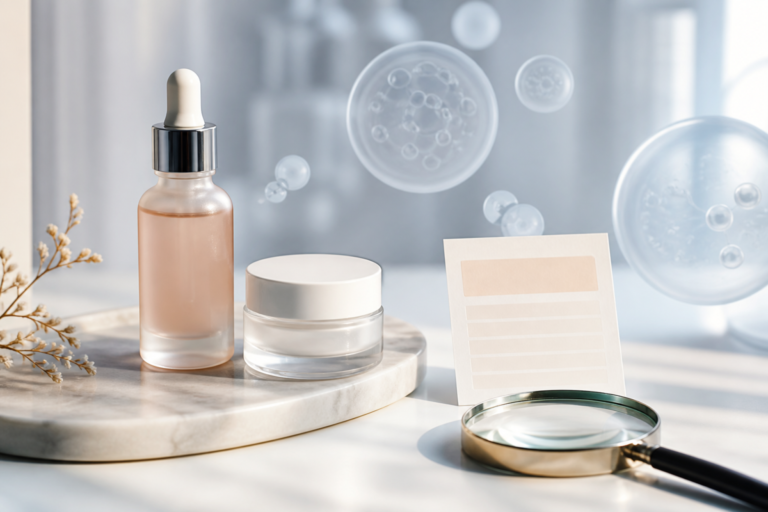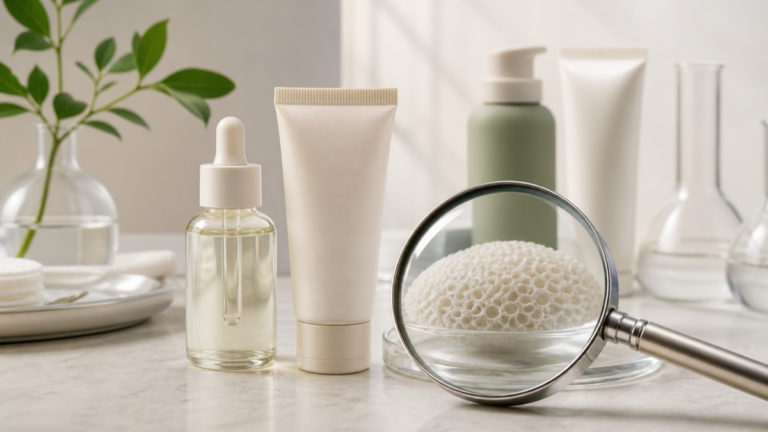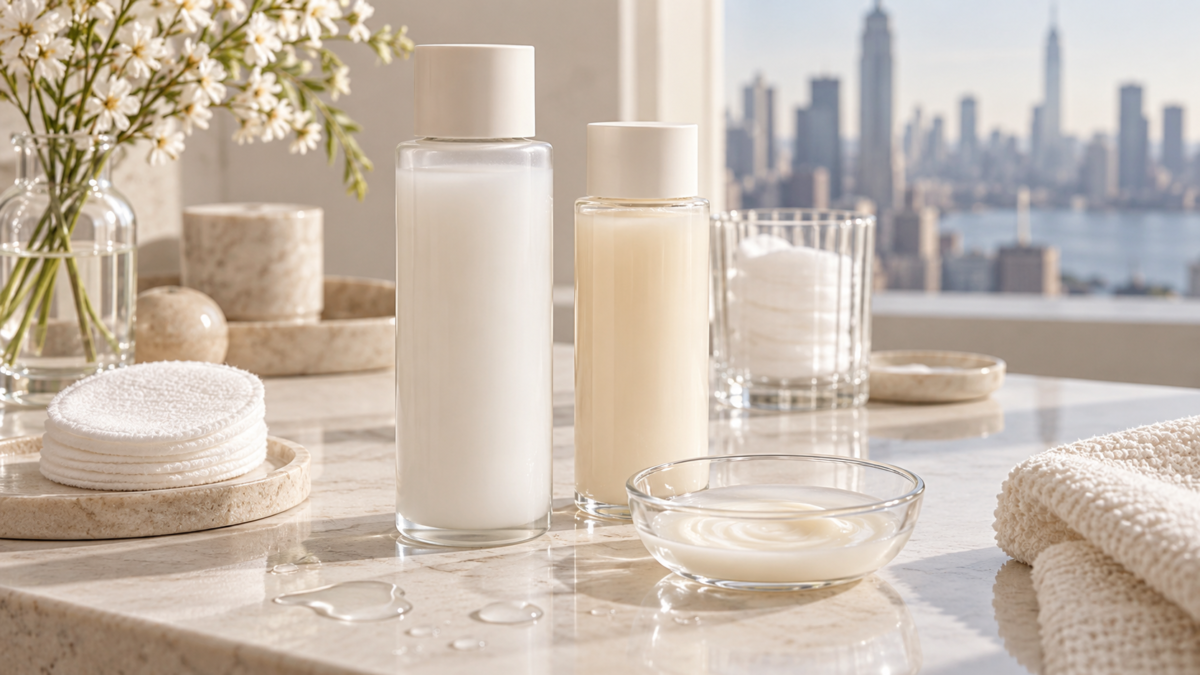
Milky toners have become a highly visible K-beauty format in the United States, offering a creamy-looking alternative to clear, water-light toners. Their appeal is easy to understand: many shoppers want hydration and softness without immediately moving to a heavy cream, while brands can combine humectants, lightweight emollients, and familiar barrier-focused ingredients in one elegant layer. Yet “milky” is a description of appearance and texture, not a regulated performance category or proof of skin-barrier repair. This guide explains what these toners are, why they fit current U.S. routines, what moisturizer research can reasonably support, and how to compare labels without assuming that every opaque bottle works the same way. It also covers application, layering, irritation risks, and the limits of trend-driven claims.
What a Milky Toner Actually Is
A milky toner is generally a fluid leave-on cosmetic with an opaque or translucent appearance created by dispersed oils, emollients, emulsifiers, polymers, powders, or other formula components. It may be closer to a light lotion than to a traditional astringent toner, but there is no single legal definition that fixes its viscosity, oil content, pH, or ingredient profile. Two bottles that look equally creamy can behave very differently on skin.
The formula may contain humectants such as glycerin, butylene glycol, panthenol, or hyaluronic acid derivatives. It may also include emollients, silicones, esters, botanical oils, ceramides, cholesterol, or fatty components. Some versions emphasize soothing or barrier language; others focus on brightening ingredients such as niacinamide. The name alone does not reveal concentration, stability, preservation, or clinical performance.
A toner also does not have to be applied with cotton. Pouring a small amount into clean hands and pressing it onto the face can reduce product loss and avoid unnecessary rubbing. Cotton pads can be helpful when the label directs wiping, but repeated friction may be uncomfortable for sensitive or irritated skin. Follow the product’s directions rather than copying a social-media method automatically.
Why the Format Fits the U.S. K-Beauty Moment
The milky-toner format sits between categories American shoppers already understand. It feels more substantial than a watery essence but lighter than many creams. That makes it easy to add to a minimal routine or use as a flexible layer when air conditioning, travel, seasonal weather, or cleansing leaves skin feeling tight.
It also fits a broader shift from harsh, alcohol-forward toner expectations toward products marketed for hydration and comfort. This does not mean every older toner is harsh or every milky toner is gentle. The point is functional positioning: brands present the product as a supportive leave-on layer rather than an aggressive final cleansing step.
For U.S. consumers curious about K-beauty, the format offers a visible texture difference without requiring a complicated device or unfamiliar treatment schedule. Retailers can demonstrate spreadability and finish, while shoppers can compare whether a product leaves tackiness, shine, softness, or pilling under sunscreen. Those sensory benefits may drive preference even when the underlying ingredients are common across moisturizers.
However, no reliable public market statistic is necessary to call the format visible. Search rankings, viral posts, retailer placement, and product launches can show attention but do not independently prove population-wide adoption or clinical value. A responsible trend analysis separates commercial visibility from measured efficacy.
What Moisturizer Evidence Can—and Cannot—Tell Us
Milky-toner-specific clinical research is limited, so the best evidence usually concerns ingredients or related moisturizer formats. This can explain plausible functions, but results from a tested cream cannot simply be assigned to a different toner. Concentration, vehicle, application amount, packaging, and companion ingredients all influence performance.
Humectants, Emollients, and Occlusion
Humectants help attract or retain water in the outer skin layer. In a double-blind study of 17 healthy volunteers, a cream containing 20% glycerin increased corneometer hydration values after ten days compared with its placebo cream. The same study did not demonstrate an effect on transepidermal water loss or irritation response. The PubMed abstract illustrates an important distinction: increased measured hydration is not identical to proving every aspect of barrier function.
Emollients improve softness and smoothness by filling spaces at the skin surface, while occlusive ingredients can reduce water evaporation. A randomized, double-blind crossover study in 51 volunteers with dry skin compared a full emollient, its vehicle, a glycerol version, and a petrolatum version. The published study record reported that glycerol contributed to hydration and petrolatum contributed to reduced transepidermal water loss, with the complete formula showing combined effects.
That finding supports formulation logic, not a rule that every toner needs petrolatum or a high glycerin percentage. A very fluid product may use lighter emollients and rely on a separate moisturizer for occlusion. Consumers should judge whether the overall routine supplies enough comfort instead of expecting one layer to perform every moisturizing function.
The Finished Formula Matters
Research on ceramide-containing creams and lotions also shows why the vehicle matters. A controlled study in people with dry, eczema-prone skin found that specific multi-vesicular emulsion products increased hydration and reduced visible dryness for at least 24 hours after one application. The study evaluated named cream and lotion formulations, not milky toners as a class.
A product that lists ceramide, glycerin, or panthenol can still differ substantially from a tested formula. The amount may be lower, the emulsifying system may differ, or other ingredients may affect tolerability. Conversely, a toner without a fashionable highlighted ingredient may perform well because the entire composition is balanced.
Evidence quality deserves attention. Many cosmetic studies are small, short, sponsored by manufacturers, conducted on forearms or legs, or designed around instrumental outcomes rather than everyday facial routines. These studies can be informative without justifying claims that a milky toner cures eczema, permanently rebuilds a damaged barrier, or replaces medical treatment.
How to Choose and Use a Milky Toner
Start with the gap in the current routine. If skin feels comfortable after cleansing and moisturizer, another layer may add cost without a clear benefit. If a watery toner evaporates quickly and a rich cream feels heavy, a milky toner may offer a useful middle texture. Choose the product for that function rather than for opacity alone.
Match Texture to Skin and Routine
Dry skin may prefer a toner containing humectants plus light emollients, followed by a cream that reduces water loss. Oily skin may use the toner as a light moisturizing step but should not assume that “milky” means noncomedogenic. Acne-prone or sensitive users should review fragrance, essential oils, exfoliating acids, and other potential irritants across the entire routine.
Apply a small amount after cleansing and before thicker serums or creams. One layer is enough to evaluate texture. Let it settle, then check for stickiness or pilling before adding sunscreen. Repeating several layers can feel pleasant but does not guarantee proportionally more hydration and may interfere with makeup or sun-protection film formation.
Introduce one new product at a time and use it consistently before changing another variable. A practical trial should answer whether the formula is comfortable, compatible with the routine, and free of obvious irritation. It cannot prove long-term anti-aging or disease-related benefits after a few applications.
Read Labels and Claims Carefully
The FDA summary of cosmetic labeling requirements explains that retail cosmetics marketed in the United States must bear an ingredient declaration and required identity, net quantity, and business information. Imported K-beauty products are subject to the same U.S. framework. Prefer a traceable seller and a package or official listing with a complete, readable ingredient list.
Ingredient order offers clues but not exact percentages. Ingredients are generally listed in descending order, while ingredients at one percent or less and color additives follow special ordering rules. A featured ingredient near the end is not necessarily useless, but the label cannot establish that the product matches a study concentration.
Claims matter too. FDA’s cosmetics labeling resources state that cosmetic labeling must be truthful and not misleading. Products intended to treat or prevent disease or affect the structure or function of the body may be regulated as drugs. Moisturizes, softens, and improves the appearance of dryness are different from claims to treat dermatitis or heal damaged tissue.
Use this comparison checklist:
- Is the product intended for hydration, exfoliation, brightening, or several functions?
- Does the complete formula fit the rest of the routine?
- Are fragrance and strong actives acceptable for the user’s sensitivity?
- Is the container sealed, traceable, and labeled for U.S. sale?
- Are the directions and claims realistic for a cosmetic product?
- Does the price make sense per ounce compared with a light lotion or essence?
Risks, Limitations, and Common Mistakes
Milky toners can irritate skin even when marketed as soothing. Fragrance, botanical extracts, preservatives, surfactants, or active ingredients may cause stinging or allergy in susceptible users. Patch testing can reduce uncertainty but cannot guarantee that repeated facial use will be reaction-free.
Layering errors are common. Combining an exfoliating toner, a retinoid, another acid serum, and a new milky toner can make it hard to identify the cause of redness. Adding more hydration does not cancel excessive irritation from strong actives. Reduce the irritating step rather than using the toner as permission to continue overuse.
Opaque appearance may also hide changes in emulsion stability. Follow storage directions, close the bottle tightly, and avoid heat or direct sun. If texture, odor, or color changes unexpectedly, stop use and contact the seller or manufacturer. Do not add water or shake indefinitely to rescue a product that appears spoiled unless the label specifically says shaking is required before each use.
This guide is general educational content, not medical advice. Persistent burning, swelling, blistering, infection signs, or worsening dermatitis requires professional evaluation. The evidence discussed here applies to specific study formulas and cannot prove that all milky toners provide the same benefits.
Conclusion & Key Takeaways
Milky toners are a practical K-beauty trend because they bridge the sensory space between watery toners and creams. Their potential value comes from the finished formula and how it fits a routine—not from their color, opacity, or viral status.
Choose one by function, complete ingredient list, realistic claims, and compatibility with moisturizer and sunscreen. Begin with a single layer, change one product at a time, and judge comfort over repeated use. For U.S. shoppers, the smartest milky toner is not the most elaborate one; it is the clearly labeled, well-tolerated product that solves a real routine need.