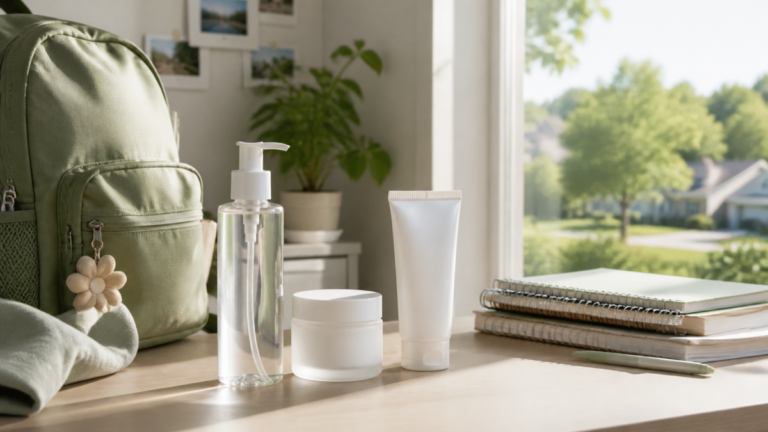
North Texas fall can move from summer-like afternoons to cooler, windy mornings within a short period, making a fixed skincare calendar less useful than a responsive routine. The official Dallas–Fort Worth climate normals show a meaningful temperature transition from September through November, but averages do not predict how any individual week—or anyone’s skin—will behave. For K-beauty users in Frisco and across the Metroplex, the practical goal is not to add more steps automatically. It is to notice changes in tightness, oiliness, comfort, and product texture, then adjust cleansing and moisturization gradually while keeping sun protection consistent. This guide uses official climate and FDA information to build a simple fall transition plan without inventing local observations or promising medical results.
What Fall Actually Changes in North Texas
The National Weather Service’s Dallas/Fort Worth normals, means, and extremes provides a useful baseline. Based on 1991–2020 normals, the normal high at DFW is 88.6°F in September, 78.4°F in October, and 66.6°F in November. Normal lows move from 68.5°F to 57.1°F and then 46.2°F. These are 30-year climate averages, not a promise that temperatures will decline smoothly.
Precipitation is uneven as well. The same official table lists normal precipitation of 2.72 inches in September, 4.37 inches in October, and 2.53 inches in November. A wetter monthly normal does not mean every day is humid, and outdoor humidity does not tell you the conditions inside an air-conditioned or heated home. Wind, indoor climate control, shower habits, and individual skin condition all affect comfort.
For skincare, the most defensible approach is observation. A person whose face remains comfortable and balanced does not need a heavier cream merely because the calendar says October. Someone noticing new tightness after cleansing, flaky patches, or stinging from a previously comfortable active may benefit from reducing irritation and adding barrier-supportive moisture. Weather can be one factor, but it is not a diagnosis.
North Texas also experiences large day-to-day swings. A routine designed only for the season may feel too rich during a warm afternoon and too light after a cool front. Keep the core routine stable and change one variable—cleanser frequency, hydrating layer, or moisturizer weight—rather than replacing everything at once.
A Practical K-Beauty Transition Routine
A fall routine can stay compact: gentle cleansing, optional hydration, moisturizer, and daytime sunscreen. Treatment products belong only when they serve a clear goal and remain comfortable. The multi-step identity often associated with K-beauty is a menu, not an obligation to use every category.
Cleanse Gently and Add Hydration Deliberately
Begin by evaluating the cleanser. If skin feels tight immediately after washing, consider using a smaller amount, avoiding very hot water, or switching to a milder product. People wearing water-resistant sunscreen or makeup may still prefer an oil-based first cleanse followed by a water-based cleanser, but double cleansing is not automatically necessary every morning and night.
A hydrating toner or essence can add water and humectants without the weight of another cream. Ingredients such as glycerin, panthenol, beta-glucan, or hyaluronic acid can appear in these products, but the finished formula matters more than a highlighted ingredient. Apply one thin layer and judge the result before adding several repetitions. If a layer leaves skin sticky or causes sunscreen to pill, more is not better.
Serums should have a defined purpose. A simple hydrating serum can fit between toner and moisturizer, while strong exfoliating acids, retinoids, or multiple brightening treatments may create unnecessary complexity when skin is already adjusting. Introduce only one new product at a time so that irritation can be traced to a likely cause.
Adjust Moisturizer by Skin Response
Instead of replacing a gel cream with a heavy balm overnight, increase support in small steps. Use a little more of the current moisturizer on dry areas, add a richer night cream, or place a thin occlusive layer only where flaking occurs. Oily or acne-prone skin may still prefer a light lotion, while dry skin may benefit from a formula combining humectants, emollients, and occlusive ingredients.
Packaging can affect convenience and hygiene. Pumps and tubes limit repeated finger contact; jars can still be used responsibly with clean, dry hands or a clean applicator. Close containers promptly. A moisturizer that is comfortable in air conditioning may feel different outdoors, so evaluate it under the conditions in which it will actually be worn.
A sample fall evening routine might be:
- Remove makeup or water-resistant sunscreen when needed.
- Use a gentle water-based cleanser without prolonged scrubbing.
- Apply one hydrating toner or serum if it improves comfort.
- Use a moisturizer suited to current dryness and texture preference.
- Pause optional actives on nights when skin feels irritated.
This sequence is not a prescription. People with diagnosed eczema, rosacea, acne, or treatment-related sensitivity may need individualized medical guidance rather than seasonal experimentation.
Why Sun Protection Still Matters
Cooler weather does not switch off ultraviolet radiation. The U.S. Environmental Protection Agency explains that the UV Index is a daily forecast of expected overexposure risk based on factors including ozone, forecast cloud cover, and elevation. Check the current index for the relevant ZIP code instead of assuming that temperature or cloudiness reveals UV intensity.
FDA’s updated sunscreen guidance recommends broad-spectrum sunscreen with an SPF value of 15 or higher, used regularly and as directed, alongside clothing, shade, sunglasses, and hats. It instructs users to apply sunscreen 15 minutes before exposure and reapply at least every two hours, or more often when swimming or sweating.
For K-beauty shoppers, U.S. product status matters. Sunscreen is regulated as an over-the-counter drug in the United States, not merely as a cosmetic. A product popular overseas is not automatically lawfully marketed as a U.S. sunscreen. Choose products with compliant Drug Facts labeling from a traceable seller and follow the label rather than relying on social-media application amounts.
Fall can make sunscreen use easier if the texture is comfortable with the rest of the routine. Allow moisturizer to settle before applying sunscreen, avoid excessively layered products that pill, and select a water-resistant option when activity or sweating calls for it. Protect the sunscreen container from excessive heat and direct sunlight as its labeling directs.
Fall Storage and Product Hygiene
Weather transitions can tempt people to move skincare between bathrooms, cars, gym bags, patios, and travel pouches. Frequent exposure to heat, sunlight, moisture, and temperature swings is not ideal. FDA’s cosmetic shelf-life guidance explains that temperature changes and exposure to sunlight and air can alter color, texture, or odor, while heat can contribute to preservative breakdown and faster microbial growth.
Keep products in a stable indoor location away from direct sun and shower spray. Do not leave a K-beauty delivery in a vehicle after pickup. If a package arrives unusually hot or damaged, allow it to return to room temperature without opening, inspect the seal and product, and contact the seller when appearance or integrity is questionable. Do not try to “fix” a separated or dried product by adding water.
FDA’s consumer cosmetic safety advice recommends keeping containers clean and tightly closed, protecting products from temperature extremes, and discarding cosmetics when color or smell changes. Marking the opening date can help because ordinary U.S. cosmetics are not generally required to display an expiration date, although products regulated as drugs follow different rules.
Wash hands before application, avoid sharing makeup, and clean reusable applicators according to their instructions. Seasonal dryness does not justify dipping wet fingers into a jar or adding water to mascara, cream, or cleanser. Hygiene remains part of product performance.
Risks, Limitations, and When to Simplify
Climate normals describe long-term weather patterns, not individual indoor exposure or skin biology. They cannot prove that a breakout, rash, or dry patch was caused by a North Texas cold front. Hormones, medications, illness, allergens, shaving, over-cleansing, and new products are among many possible factors.
Adding several “barrier” products at once can make troubleshooting harder. Fragrance, botanical extracts, preservatives, or active ingredients may irritate some users even when the product is marketed as calming. Terms such as hypoallergenic or natural do not guarantee that a reaction is impossible. Patch testing can reduce uncertainty but cannot predict every facial response.
Simplify the routine when skin burns, becomes unusually red, or develops persistent scaling. Stop the newest optional products first and retain a gentle cleanser, plain moisturizer, and suitable daytime protection if tolerated. Seek medical care for significant swelling, blistering, eye involvement, signs of infection, breathing difficulty, or symptoms that persist or worsen.
This article is general educational information, not dermatological advice. The routine suggestions are meant for ordinary cosmetic use and do not treat skin disease. Always follow product directions and obtain professional guidance when a medical condition or prescription treatment is involved.
Conclusion & Key Takeaways
DFW climate normals confirm that fall brings a meaningful average temperature transition, but North Texas weather is variable enough that skincare should respond to the person, not just the month. Keep a stable core routine, reduce harsh cleansing when tightness appears, add hydration or moisturizer gradually, and check the daily UV Index.
For Frisco-area K-beauty users, the smartest fall routine is usually the simplest one that remains comfortable through changing conditions. Store products away from heat and moisture, preserve hygiene, and change one step at a time. That approach provides better feedback—and often better consistency—than a full seasonal overhaul.