K-beauty lip tints have become a recognizable part of the American beauty conversation because they combine buildable color, lightweight textures, and finishes that range from watery stains to glossy gels. Yet the qualities that make a tint visually exciting also make its color system important. A shade that is acceptable for one cosmetic use is not automatically acceptable for every other use in the United States, and imported products must meet the same federal requirements as domestic cosmetics. This guide explains how U.S. color-additive rules apply to lip tints, how shoppers can interpret ingredient panels, and what Korean brands should check before offering a shade in America. The goal is not to rank products, but to give consumers and market entrants a clear, evidence-based framework for evaluating them.
Why K-Beauty Lip Tints Stand Out
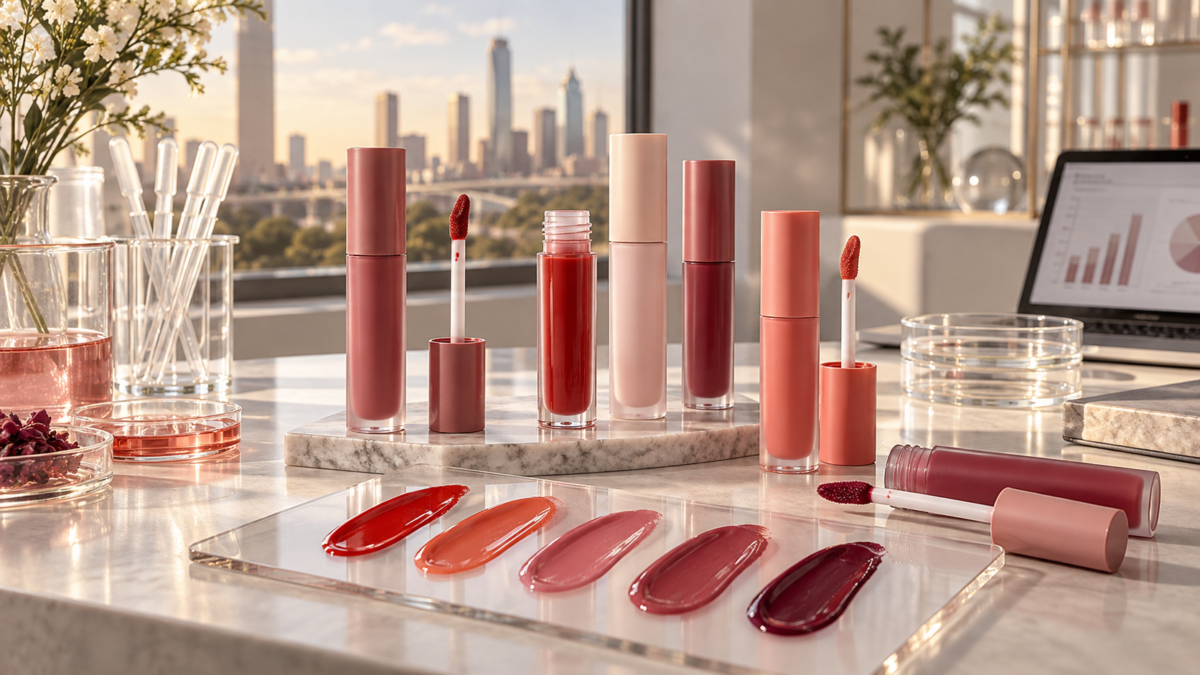
A conventional lipstick usually delivers color through a wax-and-oil stick, while a lip tint can use a fluid, gel, mousse, or glossy base. That flexibility supports several familiar K-beauty effects: a sheer wash, a blurred edge, a gradient application, or a glassy finish layered over a stain. One product name can therefore cover formulas that behave very differently on the lips. Consumers should evaluate the actual ingredient list and directions rather than assuming that every “tint” has the same composition or wear profile.
The category also illustrates why market localization is more than translating a package. A Korean shade range may use color ingredients, naming conventions, or shared shade labels designed for another jurisdiction. A U.S. launch requires a separate review against American requirements. The U.S. Food and Drug Administration explains that cosmetic products and most cosmetic ingredients generally do not receive premarket approval, but color additives are an important exception. That distinction is especially relevant to a product whose central function is adding visible color.
From a Frisco, Texas market perspective, the practical lesson is simple: attractive packaging and viral application videos may help a tint gain attention, but compliant color selection and transparent labeling help it remain viable in U.S. commerce. Retailers, distributors, and shoppers all benefit when a brand can connect each shade to a documented formula and a clear ingredient declaration.
U.S. Color Additive Rules for Lip Products
FDA states that all color additives used in cosmetics must be approved for their intended use. The agency’s Color Additives and Cosmetics fact sheet further notes that failure to meet color-additive requirements can make a cosmetic adulterated and that color violations are a common reason for detaining imported cosmetics. Approval is therefore not a broad permission to use a pigment anywhere. The applicable listing regulation controls the identity, specifications, permitted uses, restrictions, and labeling for that color.
Intended Use Matters
FDA’s reference table separates permitted uses into categories that include the eye area, externally applied cosmetics, and cosmetics generally, including lipsticks. A color permitted for external use is not necessarily permitted on the lips. Brands should check the current FDA table of color additives permitted for use in cosmetics and then read the linked regulation for the precise conditions. A supplier document or approval in another country does not replace this U.S.-specific review.
This distinction matters because a lip tint is used directly on the mouth and small amounts may be incidentally ingested during normal wear. It would be unsafe to infer that a pigment suitable for nail color, hair color, or a product applied only to external skin is automatically suitable for a tint. For a multiuse item advertised for both cheeks and lips, every color must be permitted for each represented use.
Certified vs. Certification-Exempt Colors
FDA divides listed colors into those subject to batch certification and those exempt from certification. “Exempt” does not mean unregulated or automatically acceptable. It means the color does not require FDA batch certification, but it must still comply with the applicable identity, purity, use, restriction, and labeling provisions. Colors subject to certification generally appear in 21 CFR Parts 74 and 82, while certification-exempt colors appear in Part 73.
For certifiable colors, FDA analyzes a sample from each manufactured batch before that batch may be used in products marketed in the United States. The agency’s Color Certification FAQs explains that using an uncertified batch of a color that requires certification makes the regulated product adulterated. A responsible brand or importer should therefore maintain supplier records and certification lot information rather than relying only on the color name printed on a formula sheet.
How to Read a Lip Tint Label
Consumers cannot perform a regulatory audit in a store, but they can identify basic signs of transparency. A retail cosmetic should provide an ingredient declaration using appropriate common or usual names, along with required identity and business information. Imported cosmetics marketed in the United States are not excused from these rules. The FDA summary of cosmetic labeling requirements states that cosmetics distributed in the United States must comply with federal labeling provisions.
Start With the Ingredient List
Look for a readable ingredient panel on the package or the applicable point-of-sale materials. FDA’s cosmetic ingredient names guidance says that retail cosmetics must list ingredients by their common or usual names, generally in descending order of predominance. Color additives are an exception to the normal ordering rule and may appear after non-color ingredients.
A complete list helps a shopper compare shades, identify a known sensitivity, and distinguish a color formula from marketing copy. However, the presence of a familiar color name is not proof that the manufacturer used an appropriate certified batch or met every specification. Label reading is a useful screening step, not laboratory verification.
Understand “May Contain” Shade Lists
Brands often use a shared carton or label across several shades. Under defined conditions, a shade line may present common ingredients and use “May Contain” for color additives that are not present in every shade. FDA’s Cosmetics Labeling Guide provides lipstick examples and explains the alternate declaration for branded shade lines. The phrase is not permission to list unrelated colors casually; it functions within a regulated labeling structure.
When comparing two colors from the same tint family, consumers may therefore see the same composite color list even when the shades look different. Brands should keep formulation records that map the actual colors to each shade. Retail teams should also ensure that online ingredient information matches the version and shade being sold, particularly after a reformulation.
A Practical Checklist for Shoppers and Brands
For shoppers, a careful purchase begins before application. Choose a traceable seller, confirm that the product has a legible identity and ingredient declaration, and compare the U.S. package with the listing shown online. Stop using a tint if it produces persistent burning, swelling, blistering, or another concerning reaction, and seek medical advice when appropriate. A stain’s long wear does not establish safety, authenticity, or regulatory compliance.
For Korean brands and U.S. distributors, the review should be documented shade by shade rather than conducted only at the collection level. A practical workflow includes:
- Freeze the intended U.S. formula and every represented use, such as lips only or lips and cheeks.
- Match each color additive to the FDA listing and the precise permitted-use category.
- Obtain certification lot documentation when a color is subject to batch certification.
- Check specifications, restrictions, nomenclature, and the final ingredient declaration.
- Reconcile the package, retail listing, product page, and distributor records before launch.
- Repeat the assessment whenever a supplier, pigment, formula, shade, or claim changes.
This process should be owned across formulation, regulatory, quality, and commercial teams. A marketing team may choose a compelling shade name, but the technical records must identify what is actually in that shade. Likewise, an importer needs enough documentation to respond to questions rather than assuming that the overseas manufacturer handled every U.S. requirement.
At J&J TWIN, the useful business lens is to treat compliance evidence as part of market readiness. It cannot guarantee sales, but it reduces avoidable uncertainty for retailers and partners. Early documentation review is generally less disruptive than changing cartons, online listings, or inventory after a product has entered the market.
Risks and Limitations
This guide is general educational information, not legal, medical, or regulatory advice. FDA tables and regulations can change, and a product’s compliance depends on details that a public ingredient list may not reveal, including concentration limits, purity specifications, manufacturing controls, and certification records. Companies should review the current regulation and obtain qualified advice for a specific formula.
Regulatory compliance also does not guarantee that every user will tolerate a product. Fragrance, flavor components, preservatives, pigments, or other ingredients can cause irritation or sensitivity in some people. Patch testing near—but not on—the mouth cannot perfectly predict lip tolerance, and consumers with a history of severe reactions should consult a healthcare professional.
Finally, trend visibility is not the same as verified market performance. Social posts can amplify a finish or shade without providing representative sales data, and counterfeit or diverted products can imitate popular packaging. Decisions about a brand opportunity should combine consumer observation with reliable sales, retailer, regulatory, and supply-chain evidence.
Conclusion & Key Takeaways
K-beauty lip tints offer American shoppers an inventive range of textures and color effects, but every U.S. shade must be built on more than visual appeal. Color additives must be FDA-listed for their intended use, certifiable colors require certified batches, and labels must accurately communicate the product’s ingredients.
Shoppers can favor traceable sellers and clear labels, while brands should verify each shade, use, and supplier record before launch. The strongest U.S. market strategy connects creative K-beauty formulation with disciplined documentation. That combination supports informed purchases, fewer preventable compliance problems, and more durable trust in the category.