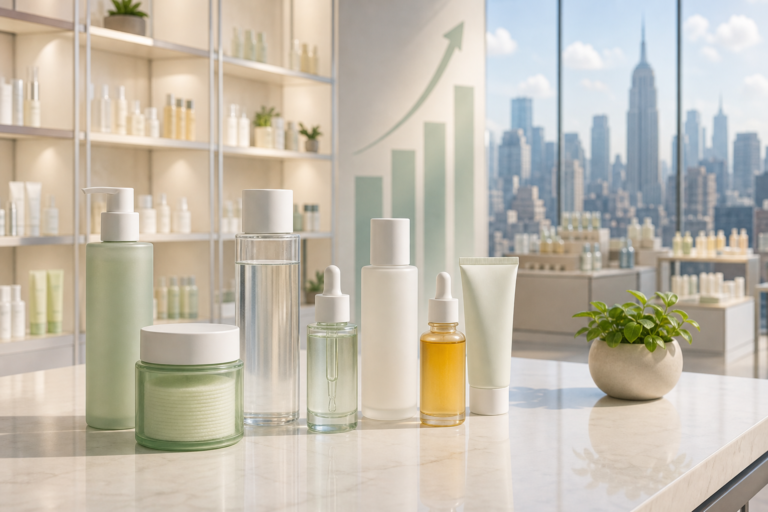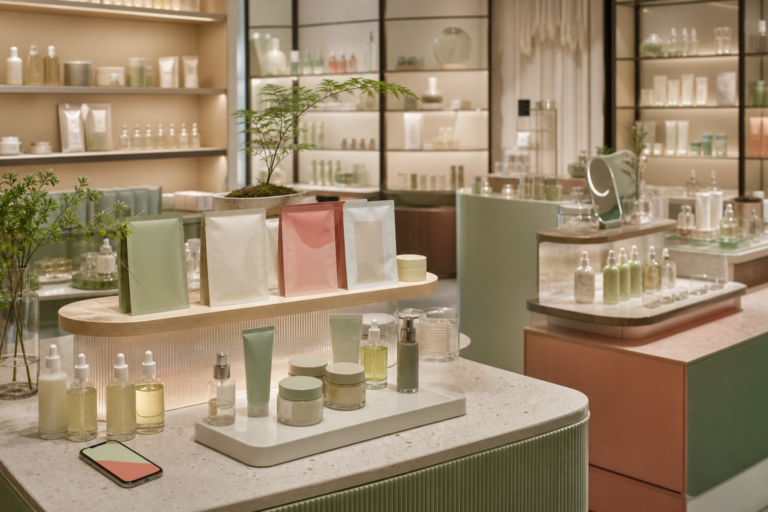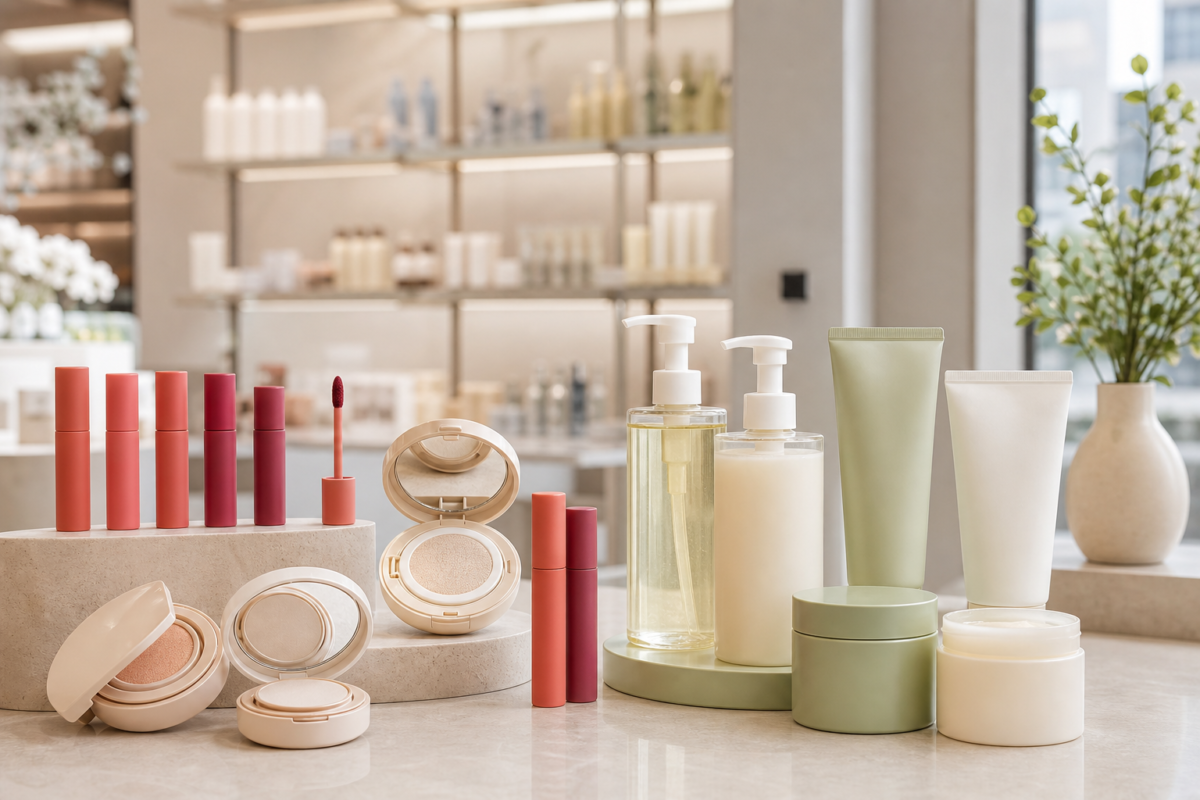
K-beauty is still strongly associated with skincare in the United States, but Korea’s export mix shows a wider story developing. Official 2025 data recorded growth across color cosmetics, cleansing products, beauty items, fragrance, and other categories—not only basic skincare. That diversification creates new ways for U.S. shoppers to enter K-beauty through a lip tint, cushion compact, cleansing oil, or foam cleanser rather than a multi-step treatment routine. It also raises harder questions about shades, color-additive rules, product education, replenishment, and assortment discipline. This article reviews what the export numbers actually show, explains why color and cleansing can complement skincare-led discovery, and outlines the evidence brands and retailers should collect before calling a category a U.S. success.
What the 2025 Export Data Shows
The Korea Customs Service reported that Korean cosmetics exports reached $8.52 billion during the first three quarters of 2025, up 15.4% from the same period in 2024 and the highest result for that nine-month period. Its official third-quarter export release also said Korea shipped cosmetics to 205 countries during those three quarters.
Full-year information later reinforced the broad growth picture. Korea’s Ministry of Food and Drug Safety reported that 2025 cosmetics exports reached $11.4 billion, 11.8% above 2024, and that the United States was the largest country destination at $2.2 billion. The MFDS 2025 performance summary places U.S. demand within Korea’s larger export expansion.
A broader category mix
The Korea Customs Service’s first-three-quarter breakdown provides the clearest official view of categories. Basic cosmetics such as skincare products remained the largest group at 41.7% of export value and grew 8.3% year over year. Color cosmetics—including examples such as face powder and lipstick—represented 15.4% and grew 17.4%. Cleansing products represented 4.9% and grew 26.3%. Beauty products, which included examples such as hair products and sheet masks, grew 24.8%, while the much smaller fragrance group grew 39.5%.
Every group listed in that release reached a record for the same nine-month period. The important strategic message is not that skincare has stopped leading; it clearly remained the largest group. The message is that expansion was distributed across multiple routines and product formats. A brand, retailer, or distributor can therefore examine K-beauty as a connected beauty system rather than a single skincare shelf.
What the data does not prove
The category figures are global Korean export data, not a category-by-category report for the United States. The MFDS total confirms that the United States was the largest national destination in 2025, but it does not establish how much of the U.S.-bound value came from lip products, cushions, cleansers, hair care, or other subcategories. It also does not measure U.S. retail sell-through, repeat purchase, profit, returns, or consumer satisfaction.
Export value records goods leaving Korea; it may reflect distributor inventory, launch shipments, currency movements, price changes, and channel expansion. Retail success requires downstream evidence. This distinction prevents a real global trend from being converted into an unsupported claim that every color or cleansing launch is growing in America.
Why Color Cosmetics Can Extend K-Beauty Discovery
Color cosmetics offer a different entry point from skincare. A shopper can see a tint’s finish, a cushion’s coverage, or a blush’s texture quickly. The purchase may feel less dependent on understanding a long ingredient story. Portable formats and visible before-and-after effects can also work well in short-form video and in-store testing.
This category can connect back to skincare positioning. Lightweight layers, dewy or soft-matte finishes, comfortable wear, and hybrid-looking formats fit the broader K-beauty emphasis on routine experience. However, a product should not imply therapeutic skincare effects without appropriate support, and the visual appeal of a format does not remove basic needs such as color accuracy, wear testing, and clear directions.
Format and finish as discovery tools
Lip tints can introduce consumers to gradient application, buildable color, or stain-like wear. Cushion compacts combine a formula, delivery sponge, applicator, and portable case, creating a distinctive use ritual. Cream and balm textures can encourage fingertip or tool application and make merchandising more tactile.
Format is only an advantage when the consumer understands it. Retail pages should show coverage level, finish, application amount, dry-down behavior, removal method, and the difference between initial color and the remaining stain. Cushion products need refill and hygiene instructions. Testers should use disposable applicators and controls that avoid cross-contamination.
Shade and merchandising readiness
A U.S. color assortment must serve the intended customer base. Translating Korean shade names is not the same as building an inclusive range. Brands need accurate swatches across relevant skin tones, undertone descriptions, consistent photography, and a plan to identify gaps from searches, returns, reviews, and customer-service questions.
Launching every shade at once may overwhelm a small retailer, while launching too few can exclude customers and weaken trust. A disciplined pilot can begin with a justified assortment, measure shade-level demand and dissatisfaction, then expand. Product pages should not digitally alter color so aggressively that the image no longer represents the item.
Why Cleansing Is a Strategic Category
Cleansing is a practical bridge between skincare and makeup. More color-cosmetic use creates a need for reliable removal, while daily sunscreen use can lead shoppers to explore oils, balms, micellar products, or gentle water-based cleansers. This makes cleansing a natural companion category without requiring a brand to promote a rigid ten-step routine.
Cleansing products are also easier to explain through use cases: removing long-wear lip color, dissolving makeup, washing away an oil cleanser, or choosing a low-friction morning cleanse. The category still requires precision. “Deep clean,” “pore detox,” and “removes toxins” can overstate what a cosmetic cleanser does. A cleanser should be evaluated for removal performance, rinsing, residue, eye-area directions, fragrance, packaging, and comfort.
Double cleansing is an option, not a rule for every person or every night. One effective cleanser may be enough when makeup and water-resistant products are not present. Over-cleansing can increase dryness or discomfort. Retail education should help customers match the method to what they need to remove, their skin condition, and the directions on each product.
What U.S. Market Readiness Requires
A successful Korean launch cannot simply reuse domestic packaging and claims. The U.S. responsible person and supply-chain partners must address cosmetic safety, ingredient and net-content labeling, business identity, warnings, product listing where applicable, adverse-event processes, and the line between cosmetic and drug claims. Color products add a particularly important review: permitted color additives and their conditions of use.
Color-additive compliance
Under U.S. federal law, color additives generally require FDA approval for their intended use in cosmetics. Some are also subject to batch certification. A color permitted for an externally applied cosmetic may not necessarily be permitted for the eye area or lips. “Natural,” mineral, or widely used in Korea does not create a U.S. exemption.
Brands should verify each pigment against the FDA’s current color-additive regulations and restrictions for the exact product area. Shades may use different pigment combinations, so reviewing only the base formula is insufficient. Supplier documentation should identify the color additive accurately and, when required, support batch-certification status.
Labels and claims
The FDA’s Cosmetics Labeling Guide explains core label elements, including identity, net contents, ingredient declaration, and name and place of business. It also addresses color-additive declaration conventions. A peel-off label, carton, compact, refill, and e-commerce page should be reviewed as a connected information system.
Claims must remain appropriate to the product’s intended use. A cleansing foam can say it removes makeup or leaves skin feeling clean when truthful and supported; saying it treats acne can move the product into drug territory. A lip tint can describe color and finish but should not imply that it heals a medical lip condition without the required drug basis.
A Retail and Brand Playbook
Brands should build a small, connected story rather than send unrelated viral products to market. One approach is a color hero with a compatible removal product and a simple routine explanation. Another is a complexion format paired with a gentle first and second cleanse. The connection must solve a customer problem, not merely increase basket size.
- Select a clear entry product. Define the target customer, use occasion, finish, price, and reason to choose it.
- Localize education. Explain shade, application, hygiene, removal, and refill behavior in plain English.
- Validate every SKU. Review pigments, labels, claims, packaging, formula stability, and shade-specific documentation.
- Prepare samples and testers. Use safe dispensing, disposable tools, cleaning schedules, and employee training.
- Plan replenishment. Track shade-level inventory and avoid promoting an item that cannot be restocked reliably.
- Connect feedback. Turn returns, reviews, searches, and support questions into assortment and content changes.
For J&J TWIN in Frisco, the most useful local test is not a claim that North Texas represents the entire country. It is a controlled feedback loop: observe which format explanations confuse shoppers, which shades are requested but missing, which cleansers are paired with makeup, and what questions arise after use. Those observations should be documented as local signals, not published as national statistics.
Signals to Watch in the United States
To determine whether the broader export trend becomes durable U.S. demand, brands and retailers should monitor evidence beyond launch impressions. Useful measures include full-price sell-through, repeat purchase by SKU, shade-level returns, review themes after several weeks, cleanser attachment rates, stockout duration, tester-to-purchase conversion, and customer-service contacts.
Retail expansion is another signal, but store count alone can mislead. Look for maintained shelf space, assortment growth, refill availability, consistent online and in-store stock, and continued education after the launch campaign. A product that appears in many doors but turns slowly may be less healthy than a focused item with reliable repeat demand.
Category overlap can also be measured. Do color buyers later purchase skincare or cleansing products? Do existing skincare customers try makeup from the same brand? These cohort patterns reveal whether “beyond skincare” is a true ecosystem or simply several unrelated launches.
What to Look Out For: Risks and Limitations
The central limitation is geographic. Korea Customs Service category growth covers global exports, while the MFDS country total identifies the United States only at the overall cosmetics level. Without U.S.-specific category data, this article treats color and cleansing expansion as a trend to test in America—not a proven U.S. sales result.
Fast category expansion can create over-assortment, short product life cycles, excess inventory, and inconsistent shades. Viral attention may favor visually dramatic items without producing repeat purchase. Cleansing routines can become unnecessarily complicated, and color formats may fail when shade representation or tester hygiene is weak.
Official export categories are broad and do not map perfectly to retail departments. Currency, classification, shipment timing, and distributor inventory can influence values. Regulatory information also changes. Brands should verify current FDA requirements and obtain professional advice for specific products. This article provides general market analysis, not legal, medical, or financial advice.
Conclusion & Key Takeaways
Korean export data shows that K-beauty growth in 2025 was not confined to basic skincare. Color cosmetics, cleansing products, beauty products, and fragrance all reached record export values for the first three quarters, while the United States became Korea’s largest overall cosmetics destination for the full year.
The opportunity for 2026 is a broader but more disciplined K-beauty experience. Color cosmetics can offer immediate discovery, and cleansing can connect makeup with skincare. Success in the United States will depend on inclusive shades, clear use education, permitted color additives, accurate labels and claims, safe testers, reliable replenishment, and repeat demand. Export momentum opens the door; product-level evidence determines what stays on the shelf.