K-beauty’s relationship with the United States reached a measurable turning point in 2025. South Korean government data show that the U.S. became the largest destination for Korean cosmetics exports, moving ahead of China as shipments continued to diversify across products and countries. This is more than a headline about export rankings. It changes how Korean brands should think about assortment, compliance, inventory, retail partnerships, and long-term customer support in America. It also gives U.S. shoppers a reason to expect broader access beyond specialty import sites. Yet export value is not the same as retail sales, consumer loyalty, or guaranteed success for every brand. This article examines the official numbers, explains what they do and do not prove, and identifies practical implications for K-beauty businesses operating in the U.S. market in 2026.
The Official 2025 Export Picture
According to a January 2026 report published by Korea.net, the official website of the Republic of Korea, South Korean cosmetics exports reached a record $11.4 billion in 2025. The report says exports rose 12.3% from 2024 and reached 202 destinations, up from 172 a year earlier. Skincare remained the largest product group at $8.54 billion, while color cosmetics reached $1.51 billion and cleansers reached $590 million.
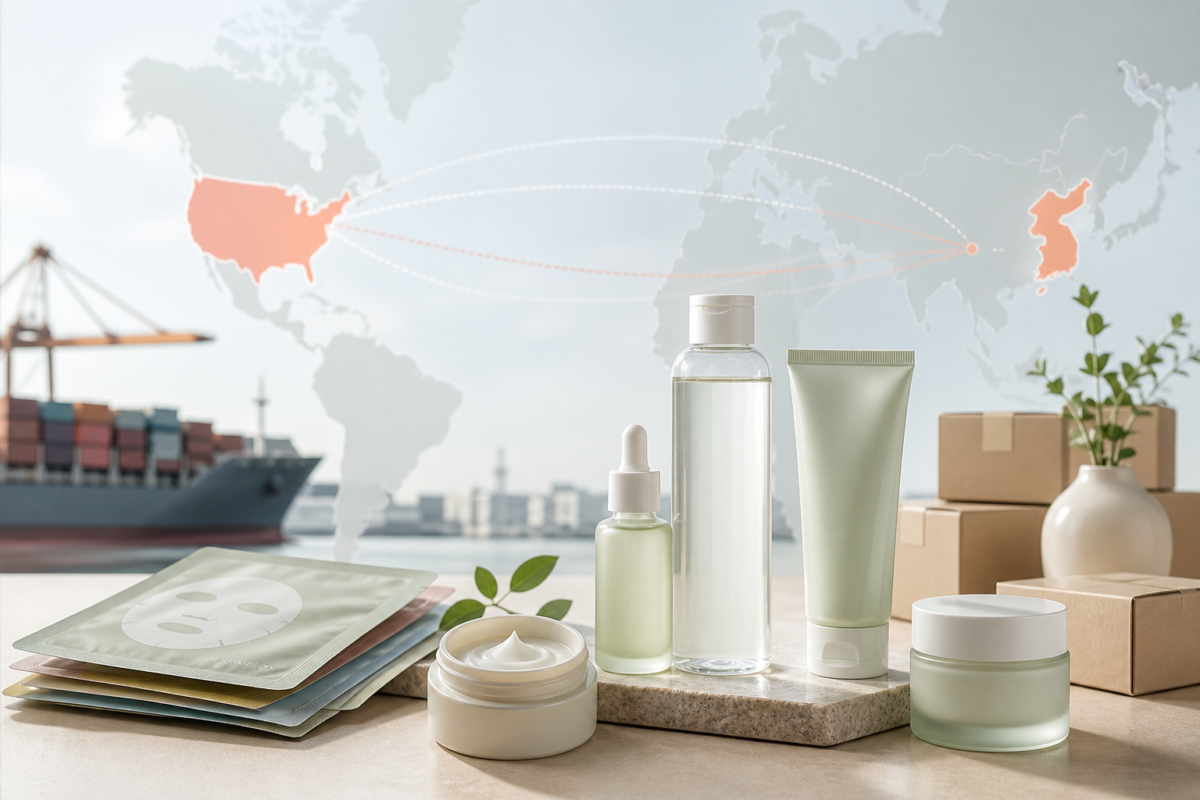
The country ranking is especially important for U.S. market watchers. A Korean government briefing reported that exports to the United States increased from about $1.90 billion in 2024 to $2.18 billion in 2025, while exports to China declined from about $2.49 billion to $2.02 billion. On that measure, the United States became the leading national destination for Korean cosmetics exports.
These figures describe customs-based export value. They should not be casually converted into U.S. retail revenue, units sold, market share, or household penetration. Products can enter through distributors, brand subsidiaries, marketplaces, and cross-border channels at different transfer prices. Inventory may also be imported in one period and sold later. The data are best used as evidence of trade direction and scale.
Why the U.S. Shift Matters
From niche discovery to market infrastructure
When export volume grows, the supporting system often becomes more important than a single viral product. Brands need U.S.-ready labels, responsible-person arrangements where applicable, safety documentation, adverse-event processes, stable importer relationships, and inventory that can support repeat purchases. Retailers need authentic supply, reliable replenishment, and customer education. The export ranking suggests that the American opportunity is large enough to justify durable systems rather than temporary campaign tactics.
A broader product mix can follow
Skincare still dominates Korean cosmetics exports, but official customs reporting for the first three quarters of 2025 noted records across multiple groups, including basic skincare, sun-care and other preparations, color cosmetics, hair and mask products, cleansers, and fragrance. A larger U.S. channel can create room for more than one hero serum. However, U.S. classification matters: sunscreen, acne treatment, and certain hair-loss claims can place products under drug rules rather than ordinary cosmetic rules.
More opportunity also means more competition
A growing export market attracts established conglomerates, independent labels, contract manufacturers, private-label buyers, distributors, and copycat positioning. Being Korean is no longer a complete point of difference. Brands must explain who the product is for, what evidence supports its claims, why the format improves the routine, and how the customer can repurchase it without uncertainty.
What Is Supporting U.S. K-Beauty Growth?
Fast and varied product development
Korean beauty companies are known for developing varied textures, delivery formats, ingredient stories, and price points. That variety gives U.S. retailers multiple ways to build an assortment—from gentle cleansers and hydrating toners to cushion makeup and targeted patches. Speed alone is not a lasting advantage, though. A fast launch must still meet U.S. safety, labeling, claims, and supply requirements.
Digital discovery lowers the entry barrier
Short-form video, creator demonstrations, search, reviews, and marketplace recommendations can introduce a small product without a national advertising campaign. Visual formats make textures, packaging, layering, and before-and-after presentation easy to communicate. The limitation is that the same speed can spread exaggerated claims, counterfeit listings, or routines that are unsuitable for some users. Brands need approved creator language and active marketplace monitoring.
Online and offline access are converging
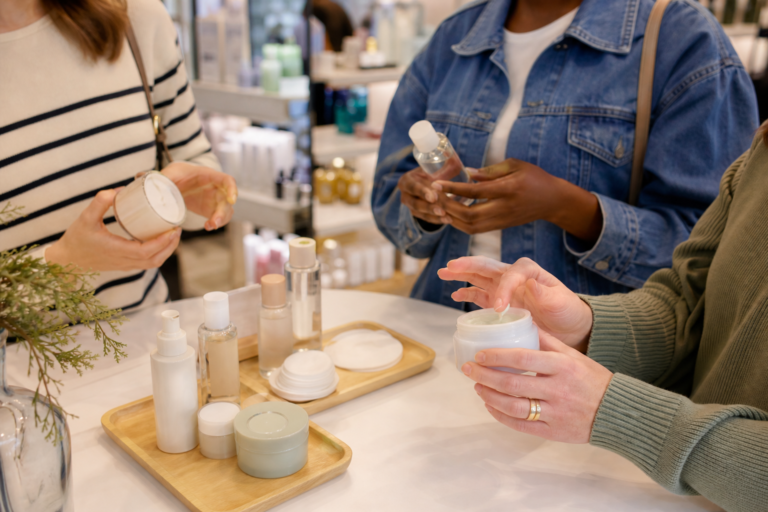
Korean government projections for 2026 cite expanded access through both online and offline channels as a support for continued cosmetics growth. In practice, customers may discover a product on social media, compare it on a marketplace, test a related item in a store, and reorder from a brand site. Consistent names, claims, sizes, and pricing across those touchpoints help reduce confusion.
A 2026 Action Plan for Korean Brands
1. Choose a clear role in the routine
Do not launch a broad catalog simply because the export market is growing. Identify the customer problem, routine step, evidence, and competitive set for each priority SKU. A focused entry assortment is easier to explain, forecast, train, and replenish. It also produces cleaner feedback about what U.S. buyers value.
2. Localize compliance before marketing
Review the finished formula, packaging, ingredient declaration, net contents, business identity, warnings, and claims for the U.S. channel. Confirm whether the product is a cosmetic, drug, or combination product. MoCRA obligations and FDA facility registration or product listing questions should be addressed with qualified specialists rather than left until a retailer requests documents.
3. Build a replenishment system
First orders can be driven by novelty; retention depends on availability. Establish realistic lead times, safety stock, lot tracking, shelf-life controls, and a response plan for delayed or damaged inventory. For Texas distribution, summer heat and long delivery routes deserve product-specific consideration.
4. Measure retention, not only reach
Track repeat purchase, time to second order, return reasons, review themes, out-of-stock frequency, and customer questions. Creator views and marketplace rank are useful signals, but they do not reveal whether the product earns a stable place in a routine. Separate promotional spikes from sustained demand.
5. Protect authenticity and trust
Publish authorized-seller information, recognizable lot and package details, and clear customer-service channels. Monitor unauthorized listings and misleading claims. When formulas or packages change, explain what changed and what did not. In a crowded market, operational transparency can become a competitive advantage.
What the Trend Means for U.S. Retailers and Consumers
Retailers can expect a larger supplier pool, but more choice increases the need for disciplined curation. Verify the manufacturer and distributor, review U.S. labeling, examine claims, confirm replenishment capability, and train staff on the actual product rather than a generalized idea of K-beauty. Category pages should distinguish cosmetics from U.S. OTC drugs such as sunscreens and acne treatments.
Consumers may gain faster domestic shipping and more opportunities to buy from authorized U.S. channels. They should still compare seller identity, ingredient lists, package condition, return policies, and product directions. A product’s popularity in Korea does not guarantee that every version is authorized or labeled for the American market, particularly in regulated categories.
What to Look Out For: Risks and Limitations
- Export value is not sell-through: customs data do not show how quickly inventory reaches consumers.
- Growth is uneven: the national trend does not guarantee success for each brand, retailer, or product type.
- Regulatory categories differ: a product sold as a cosmetic elsewhere may face drug requirements based on U.S. ingredients, claims, or intended use.
- Channel concentration creates risk: dependence on one marketplace, retailer, creator, or distributor can make growth fragile.
- Viral demand can distort planning: a short spike can lead to over-ordering, stockouts, inconsistent pricing, and customer disappointment.
Trade conditions, duties, customs procedures, and platform policies can also change. Importers should verify current requirements for the specific product and shipment rather than relying on a general trend article. This content is informational and is not legal, customs, tax, or investment advice.
Conclusion and Key Takeaways
Official 2025 data establish a major change: the United States became the largest destination for South Korean cosmetics exports as total K-beauty exports reached a record $11.4 billion. The shift confirms the strategic importance of American consumers and channels, but it does not remove the need for careful execution.
The brands most likely to build durable U.S. positions in 2026 will combine product appeal with compliant claims, reliable supply, channel consistency, authentic distribution, and retention-focused measurement. For U.S. retailers and consumers, the benefit should be broader access—but the growing category makes verification and thoughtful selection more important, not less.