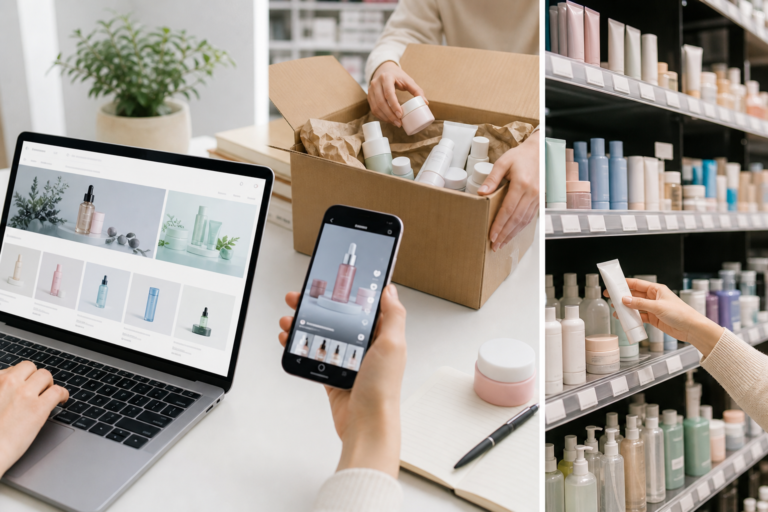
K-beauty’s U.S. growth has made Korean skincare easier to find, but availability does not always make a purchase easy to evaluate. The same product may appear on a brand website, a retailer, a marketplace, a social-commerce listing, and several third-party shops at different prices. Packaging can change by market or production date. Viral demand can attract unauthorized sellers and imitations.
No single packaging trick can prove authenticity. A safer decision combines seller verification, label review, realistic pricing, product condition, and direct confirmation from the brand when needed. This guide offers a repeatable process without assuming that every unfamiliar seller is counterfeit or every package difference is suspicious.
Start with the Seller, Not the Product Photo
The strongest first question is who is responsible for the sale. Prefer the official brand website, a retailer listed by the brand, or a verified official storefront. On a marketplace, distinguish the product detail page from the actual seller and fulfiller. Several sellers may share a page, and inventory practices can differ.
Look for a business name, contact method, return policy, shipping origin, and consistent history. Search the brand’s website for authorized retailers. If authorization is unclear, send the listing URL to the brand. A short confirmation can be more reliable than hours of comparing fonts.
Fulfillment Is Not the Same as Authorization
A marketplace may store and ship an item sold by a third party. Fast fulfillment does not necessarily mean the brand supplied that seller. Conversely, a small authorized retailer may fulfill orders itself. Read both seller and fulfillment lines and keep a copy of the order record.
Evaluate Price in Context
Legitimate promotions occur, especially during holidays, product transitions, and retailer events. A lower price alone is not proof of a counterfeit. Concern increases when the discount is extreme, always available, and paired with unclear seller identity or missing returns.
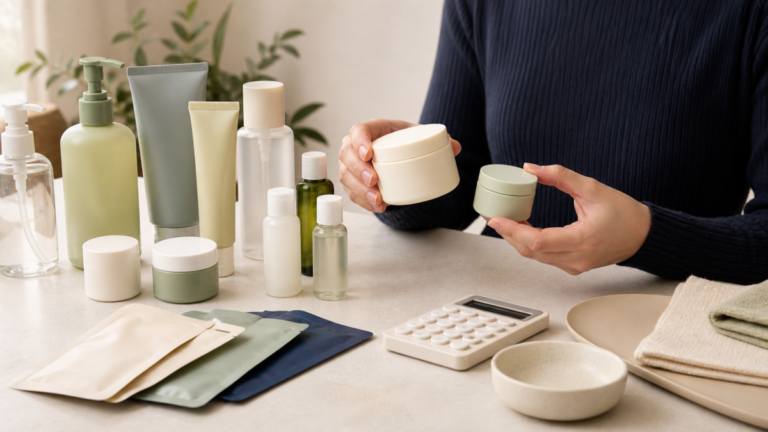
Compare the brand’s U.S. list price, size, set contents, shipping, and current promotions. Some apparent bargains are smaller versions, old bundles, or foreign-market packages. Calculate price per unit and confirm the exact variant.
Understand Why Packaging Can Differ
Brands redesign packages, update ingredients, create travel sizes, and use market-specific labels. A Korean domestic package may not look identical to a U.S.-labeled product. Stickers can be legitimate when used to provide required importer or English information, but they should be readable, durable, and consistent with the product.
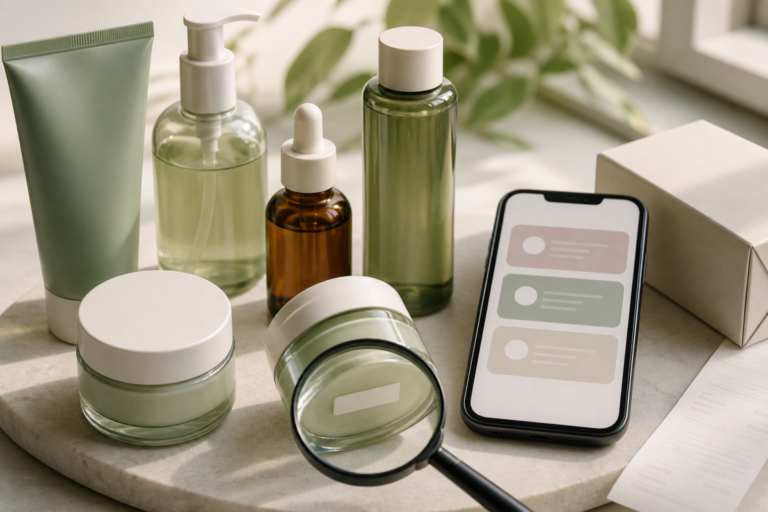
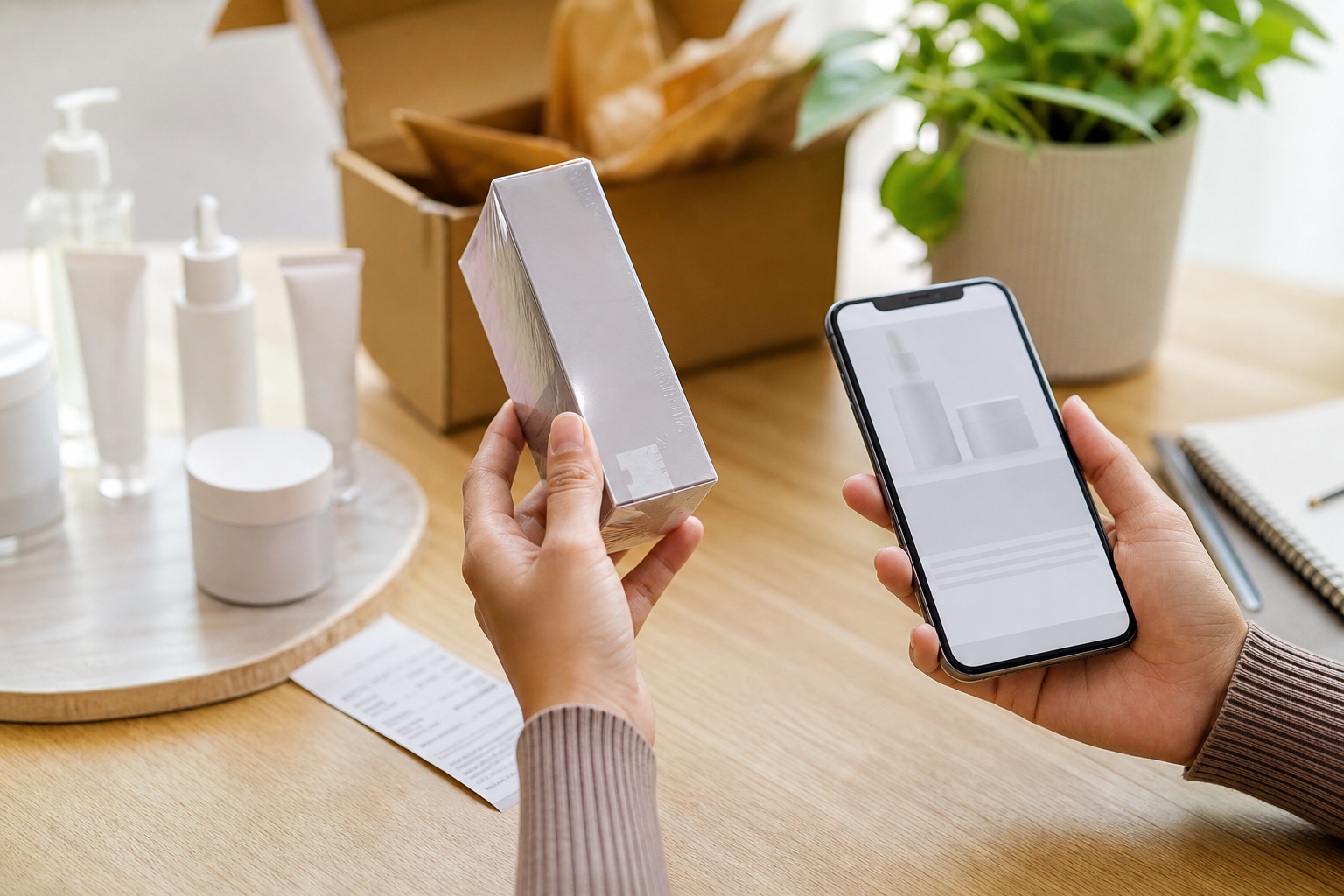
Compare the item with current official images and announcements. Check the product name, net contents, ingredient declaration, directions, responsible-party contact, lot marking, and seals when the brand normally uses them. One color difference under different lighting is weak evidence; multiple inconsistencies deserve follow-up.
Lot Codes Help Traceability
A lot or batch code can help a brand investigate manufacturing and distribution. It is not a public universal authenticity decoder. Websites claiming to interpret every beauty code may be incomplete. Photograph the code and ask the brand when age or validity is uncertain.
Inspect Condition When the Order Arrives
Document the unopened parcel if the seller is unfamiliar or the item is expensive. Check for leakage, broken seals, damaged pumps, unusual separation, missing labels, or an odor inconsistent with the official description. Temperature exposure during shipping can affect legitimate products, so damage does not automatically mean counterfeit.
Do not use a product that appears contaminated or dangerously altered. FDA notes that cosmetics can become harmful when contaminated with microorganisms and that companies are responsible for product safety. Keep the package, receipt, seller details, and photographs while contacting the seller or brand.
Read Claims with Care
A seller may copy dramatic claims that the brand never approved. Cosmetics marketed in the United States must be properly labeled and cannot be misleading. Claims to treat disease or alter body structure can place a product under drug rules. Suspicious medical promises are a reason to verify the listing.
Look for complete directions and warnings rather than relying on the title. A listing that hides the ingredient declaration, changes the product purpose, or adds cure language may be inaccurate even if the physical item is genuine.
Use Reviews as Patterns, Not Proof
Reviews can reveal recurring leakage, changed texture, seller substitutions, or service failures. They cannot authenticate your individual unit. Some reviewers compare different versions without realizing it, and photos may be attached to a shared listing sold by several businesses.
Focus on recent reviews of the same seller and variant. Separate product preference from evidence. “This irritated me” is important experience but does not prove that the item was fake. “The seller sent a different size and removed the lot label” is a more concrete fulfillment issue.
A Seven-Step Purchase Process
- Find the official product page and record the current name, size, ingredient list, and authorized seller guidance.
- Confirm the marketplace seller and fulfiller rather than trusting the page headline.
- Compare total price and variant with established U.S. retailers.
- Review return, damaged-product, and customer-service policies.
- Save screenshots of the listing and order confirmation.
- Inspect the unopened item, label, seal, and lot marking upon arrival.
- Contact the brand before use when major inconsistencies remain.
What Brands Can Do to Protect Customers
Brands should publish an authorized seller page, current package images, reformulation notices, and a method for reporting suspicious listings. Official storefronts need consistent naming and visible verification. Customer service should know how to request lot photos without promising that one visual feature proves authenticity.
Channel pricing and inventory also matter. Severe unexplained differences encourage confusion. Serialized tools or verification labels may help in some categories, but they require secure design and consumer education. The foundation remains controlled distribution and responsive investigation.
Sponsored Recommendations and Transparency
A creator relationship does not determine authenticity, but disclosure helps shoppers evaluate motivation. FTC guidance says material connections such as payment or free products should be disclosed clearly with the endorsement. Look for a disclosure near the recommendation, not hidden on a profile page.
A disclosed sponsorship can still provide useful texture and application information. Treat it as one source and verify seller, label, and product details independently.
Risks and Limitations
Counterfeit techniques evolve, and legitimate packaging changes can resemble warning signs. This guide cannot authenticate a product remotely. A brand, authorized distributor, retailer investigation, or appropriate authority may be needed. Avoid opening payment disputes without preserving records.
Skin irritation can occur with authentic cosmetics. Authenticity does not guarantee suitability. Stop use when significant irritation occurs and seek qualified care for persistent or severe symptoms.
Conclusion and Key Takeaways
Buying authentic K-beauty in the United States is primarily a supply-chain decision. Begin with an official or authorized seller, confirm the exact variant, preserve documentation, and inspect condition. Use packaging differences as questions rather than automatic verdicts.
When uncertainty remains, contact the brand before applying the product. A careful process protects both the consumer and legitimate businesses, while reducing the fear and guesswork that can accompany a fast-growing market.