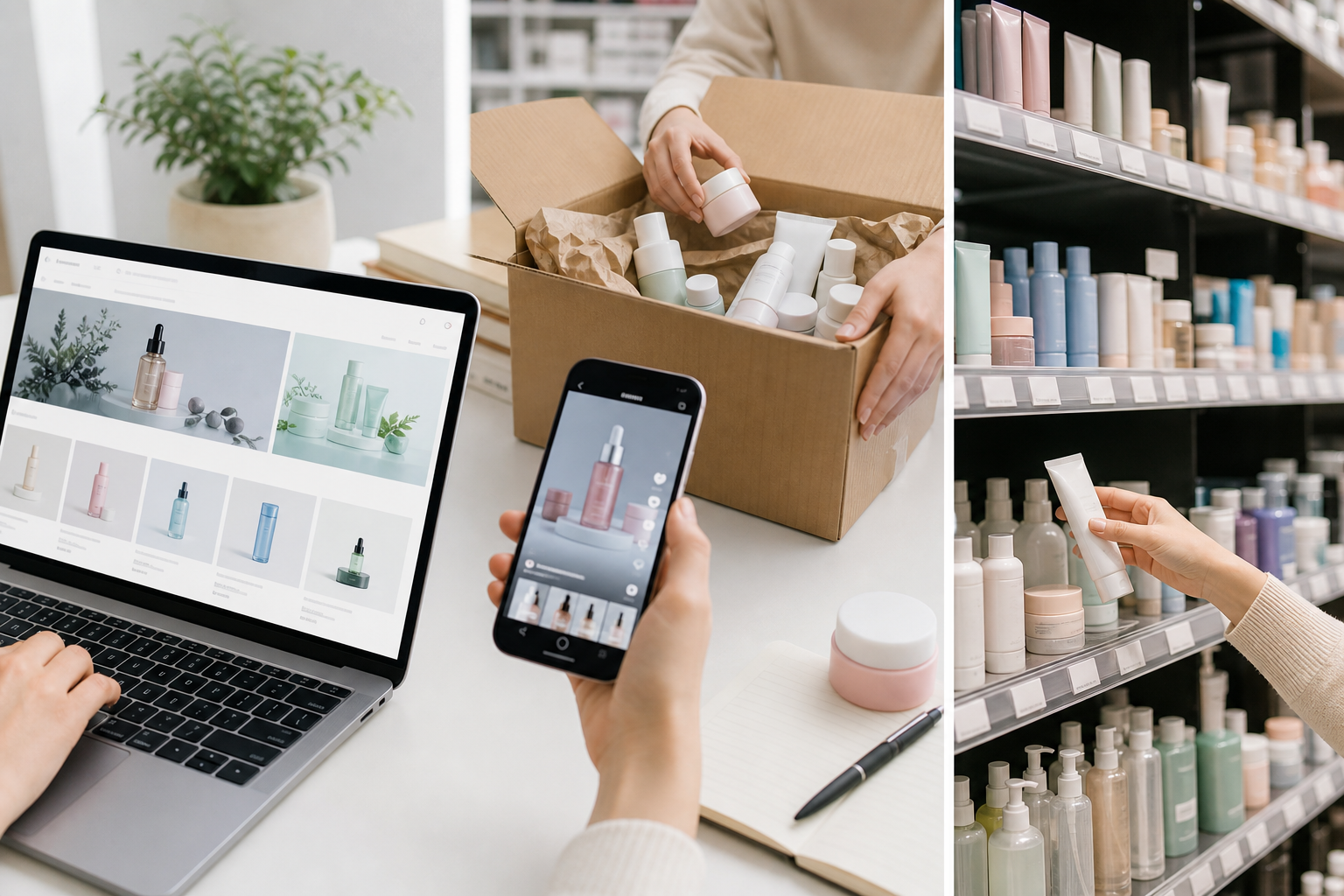
A Korean beauty brand entering the United States often asks which sales channel is best. Amazon offers reach and convenient fulfillment. TikTok Shop connects entertainment with immediate purchase. Sephora and Ulta provide specialty-beauty credibility and physical discovery. A brand-owned website offers control over data, storytelling, and customer relationships. None is automatically the right first choice.
The decision should follow the product, customer, economics, operational readiness, and launch objective. A viral mask and a premium treatment set may require different paths. This guide compares channel roles and provides an actionable scorecard for choosing without assuming that maximum distribution is always the goal.
Start with the Job the Channel Must Perform
A channel can create awareness, validate demand, produce cash flow, build prestige, support replenishment, or collect customer insight. Trying to accomplish every objective at once usually creates conflicting prices and inventory. Define one primary job for the first six months and one supporting metric.
For example, a marketplace launch may test search demand and review themes. A social-commerce launch may test whether demonstrations convert. A specialty retailer may build trust and sampling. An owned site may validate whether the brand can acquire and retain customers without relying entirely on a platform.
Amazon: Search Demand and Operational Scale
Amazon is often where U.S. shoppers compare products they already know. Its strengths include broad reach, familiar checkout, fulfillment infrastructure, and replenishment convenience. A brand can observe search terms, questions, return patterns, and review themes. The platform can be effective for cleansers, moisturizers, masks, and other products that customers reorder.
The risks include price competition, unauthorized sellers, inventory complexity, advertising expense, and limited control over the surrounding experience. A strong listing requires accurate images, complete directions, ingredient information, controlled claims, and consistent seller identity. Brand registry and supply-chain planning may become as important as creative marketing.
When Amazon Fits
Amazon is more suitable when demand already exists, the product can withstand marketplace fees, inventory can be replenished reliably, and customer support can respond quickly. It is less attractive when the product requires lengthy consultation, has fragile economics, or depends on a premium environment that the listing cannot reproduce.
TikTok Shop: Demonstration and Fast Discovery
TikTok Shop shortens the path from discovery to checkout. Products with visible textures, transformations, routines, or application techniques can attract attention quickly. Creator participation can produce many interpretations of the same product and reveal which message resonates.
Speed is also the risk. Demand can spike before inventory and service are ready. Heavy promotions can anchor the product to a discount price. Creator statements can exceed approved claims. Brands need written briefs, monitoring, fulfillment capacity, and a plan for returns and complaints before a campaign scales.
Disclosure and Claim Control
The FTC says creators should clearly disclose material relationships with brands. Free product, payment, employment, and other benefits can create a connection requiring disclosure. The disclosure should appear with the endorsement and be difficult to miss. Brands should not assume a platform label solves every context.
Sephora and Ulta: Credibility, Sampling, and Retail Discipline
Specialty beauty retail can place a brand where shoppers expect curated discovery, testers, associates, and comparison. Physical presence helps products whose texture or shade matters. Retail placement can also strengthen credibility with press, creators, and other partners.
The requirements are demanding. Retail margins, purchase orders, launch calendars, packaging standards, logistics, returns, testers, promotions, and sales support all affect profitability. A retailer may expect evidence of demand before expansion. The brand must support the shelf after earning it.
Readiness Is More Important Than Prestige
A premature specialty launch can be expensive. The brand needs adequate inventory, U.S.-ready labels, insurance, reliable forecasting, and marketing resources. A beautiful product without replenishment or education may lose space. Retail should be viewed as an operating partnership rather than a logo for the investor deck.
The Brand Website: Control and First-Party Learning
An owned site gives control over design, education, bundles, subscriptions, and customer data collected with appropriate consent. It can explain a routine in depth and connect editorial content with products. Gross margin may look attractive before advertising, fulfillment, customer service, fraud, and return costs are counted.
Traffic is not automatic. The brand must earn visits through search, email, creators, partnerships, events, or paid media. The owned site works best as the stable center of the channel system even when marketplaces or retailers produce more transactions.
Build a Channel Economics Model
Calculate landed product cost, freight, duty, warehousing, pick-and-pack, platform commission, payment fees, advertising, creator commission, samples, discounts, returns, damage, and customer support. Then model contribution margin at full price and realistic promotional price. Revenue without contribution can hide a weak launch.
Include cash timing. Retail orders may be large but paid on terms. Marketplaces may hold reserves. Social spikes require inventory paid before revenue arrives. A channel that looks profitable on a percentage basis may still create a cash-flow problem.
Use a Weighted Decision Scorecard
- Product demonstration: Does the format need video, sampling, shade matching, or consultation?
- Existing demand: Are shoppers already searching for the brand or category?
- Margin resilience: Can the product support fees, promotions, and returns?
- Operational capacity: Can inventory, service, and compliance scale with demand?
- Brand objective: Is the priority awareness, credibility, data, or replenishment?
- Customer ownership: How much direct relationship and consented data are needed?
Score each factor from one to five, assign a weight, and document the assumption. Revisit the model after ninety days with actual return rates, advertising costs, and reorder behavior.
A Phased Launch Example
A new skincare brand might begin with an owned educational site and one marketplace storefront. It can test descriptions, gather support questions, and stabilize fulfillment. Selected creators then demonstrate the product with clear disclosures. If reorder rates and reviews are healthy, the brand can approach specialty retail with evidence rather than projections.
Another brand with a highly visual mask may start with controlled social commerce and limited inventory, then route replenishment to an official marketplace listing. The sequence should follow the product rather than a universal playbook.
Risks and Limitations
Platform rules, fees, and algorithms change. Retail acceptance is never guaranteed, and channel performance varies by category and brand recognition. This article is general business information, not legal or financial advice. Brands should review current agreements and obtain qualified guidance before committing inventory or claims.
Conclusion and Key Takeaways
The best channel is the one that performs the needed job with sustainable economics and manageable risk. Amazon supports search and replenishment, TikTok Shop accelerates demonstration, specialty retail provides curation and sampling, and the brand website creates control and learning.
Choose a primary channel deliberately, support it operationally, and add another only when the first has produced useful evidence. Distribution breadth is valuable after the brand can maintain trust, inventory, pricing, and service across every place it appears.